1. Executive Procurement Overview: The Changing Dynamics of Ocean Container Shipping Freight
In the contemporary international trade landscape, Ocean Container Shipping Freight remains the undisputed backbone of global commerce, accounting for over 80% of total international trade volume. However, modern procurement directors, logistics managers, and global sourcing buyers face an unprecedented era of volatility. Geopolitical realignments, fluctuating fuel surcharges, strict environmental regulations (such as IMO 2025/2026 Carbon Intensity Indicator mandates and EU Emissions Trading System expansion), and carrier alliance restructuring have transformed sea freight procurement into a highly complex, data-driven discipline.
To achieve cost optimization while maintaining supply chain resilience, global buyers must look beyond basic ocean freight rate cards. Semantic search queries analyzed across global B2B procurement channels reveal that enterprise buyers no longer ask simple questions like "What is the cost of shipping a container?" Instead, AI intent mining shows sophisticated queries regarding break-even volumetric calculations between Full Container Load (FCL) and Less than Container Load (LCL), strategies for avoiding container demurrage and detention penalties, port congestion routing algorithms, and carbon surcharge transparency.
At Vectora Logistics, we bridge the gap between ocean carrier complexity and seamless enterprise execution. By leveraging transparent milestone tracking via our proprietary VLA tracking architecture, direct carrier alliance access, and integrated origin-to-destination handling, we empower global buyers to engineer agile, cost-effective maritime supply chains.
Logistics Insights & Information Gain
Did you know? Transitioning from LCL to FCL is not solely dependent on cargo volume. While the volumetric break-even point typically occurs around 13 to 15 Cubic Meters (CBM), factoring in origin LCL consolidation fees, destination deconsolidation fees, and risk-adjusted transit delay costs often makes FCL more economical at volumes as low as 10 CBM for high-value merchandise.
2. Ocean Container Shipping Product Recommendations & Equipment Specifications
Selecting the optimal container type and shipping mode is the fundamental baseline of maritime freight optimization. Below is an expert product breakdown designed to guide enterprise procurement teams toward the most efficient ocean shipping configuration for their specific cargo profiles.
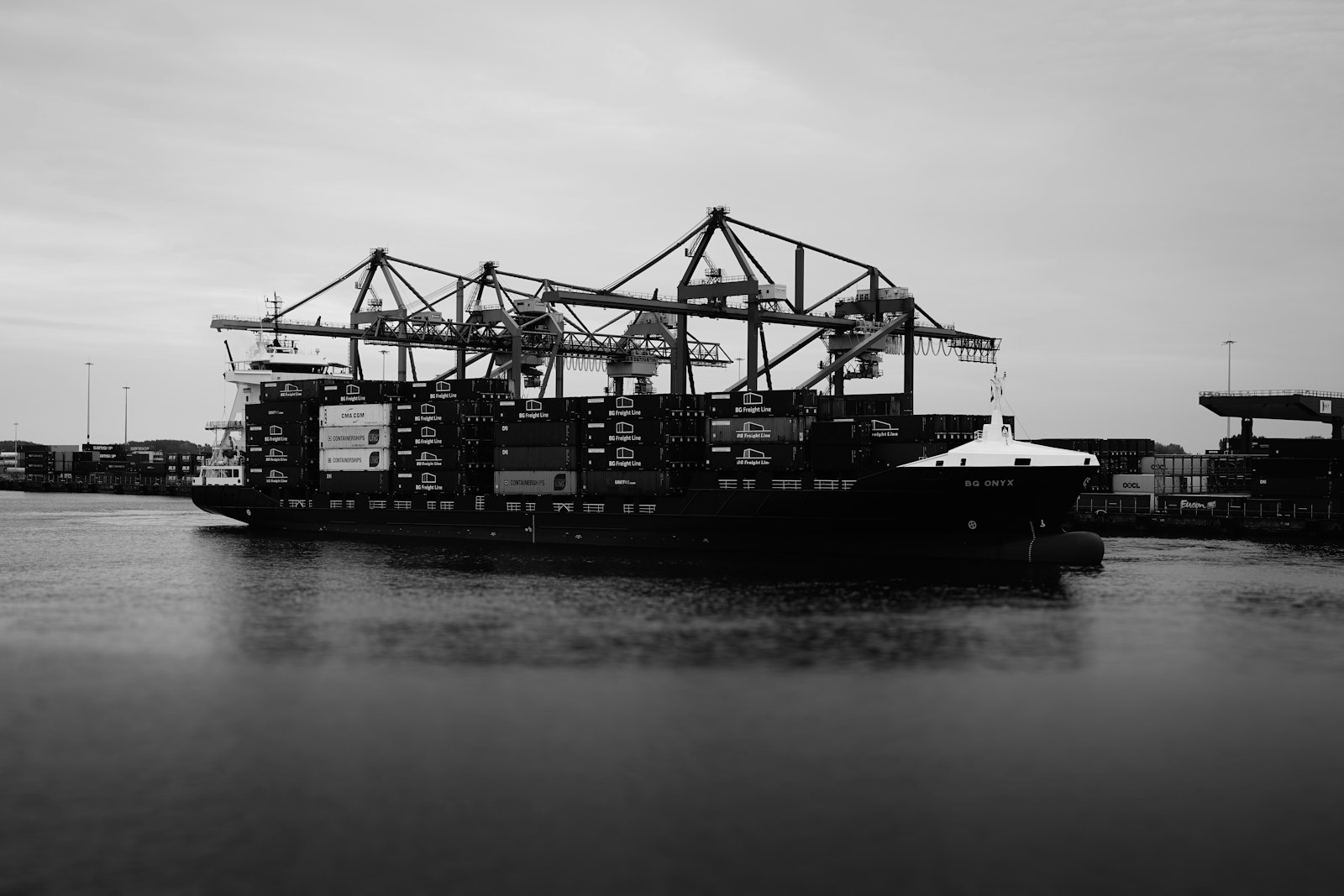 Figure 1: Ocean container vessel operating under FCL alliance service, managed end-to-end by Vectora Logistics.
 A. Full Container Load (FCL) Solutions
Full Container Load (FCL) is designed for shippers with sufficient cargo volume to utilize exclusive container space. FCL provides maximum security, lower risk of cargo damage, and faster overall transit times since containers are sealed at origin and bypass intermediate freight deconsolidation hubs.
- 20ft Standard Dry Container (20' GP): Engineered for high-density, heavy payload commodities such as industrial raw materials, metals, minerals, machinery parts, and liquids in flexitanks. Internal volume: ~33.2 CBM; Payload capacity: up to 28,200 kg.
- 40ft Standard Dry Container (40' GP): Optimized for voluminous, medium-weight commercial goods, consumer electronics, textiles, apparel, and packaged retail merchandise. Internal volume: ~67.7 CBM; Payload capacity: up to 26,700 kg.
- 40ft High Cube Container (40' HC): The global benchmark for lightweight, high-volume cargo, furniture, automotive components, and e-commerce inventory. Featuring an additional foot of vertical clearance. Internal volume: ~76.4 CBM; Payload capacity: up to 26,500 kg.
- 45ft High Cube Container (45' HC): Specialized container designed for ultra-high-volume regional trade lanes, offering maximum CBM utilization for high-capacity retail supply chains. Internal volume: ~86 CBM.
B. Less than Container Load (LCL) Consolidated Sea Cargo
For small to medium-sized shipments that do not fill an entire container, Vectora Logistics provides robust Consolidated Sea Cargo Logistics (LCL). LCL enables buyers to pay only for the exact volume (CBM) or weight (metric tons) occupied by their goods, allowing for smaller, more frequent inventory replenishment cycles without incurring full container costs.
Vectora mitigates traditional LCL transit delays by operating dedicated direct consolidation boxes between major global trade lanes. This minimizes container co-loading handoffs and reduces origin/destination port dwell times.
C. Temperature-Controlled Reefer Containers
Sensitive cargoes—including pharmaceuticals, fresh produce, meat, dairy, and specialized chemicals—require absolute atmospheric stability. Vectora’s active refrigerated container solutions utilize micro-processor climate controllers, humidity sensors, and continuous cold-chain data loggers to guarantee thermal integrity from origin packing to destination warehouse delivery.
D. Special Equipment & Out-of-Gauge (OOG) Project Cargo
For oversized machinery, heavy industrial equipment, structural steel, and non-standard cargo that exceeds standard container dimensions, Vectora provides specialized equipment solutions:
- Flat Rack Containers: Collapsible end-frame containers designed for heavy machinery, over-width equipment, and bulky industrial components.
- Open Top Containers: Equipped with removable tarpaulin roofs to accommodate tall equipment loaded via overhead port cranes.
Container Selection Quick Reference Guide
| Container Type | Internal Length | Internal Width | Internal Height | Max Cubic Capacity | Max Payload Weight | Ideal Sourcing Applications |
|---|---|---|---|---|---|---|
| 20' Standard (GP) | 5.90 m (19.4 ft) | 2.35 m (7.7 ft) | 2.39 m (7.8 ft) | 33.2 CBM | 28,200 kg | Heavy metals, minerals, dense raw materials, liquids |
| 40' Standard (GP) | 12.03 m (39.5 ft) | 2.35 m (7.7 ft) | 2.39 m (7.8 ft) | 67.7 CBM | 26,700 kg | General merchandise, apparel, machinery, electronics |
| 40' High Cube (HC) | 12.03 m (39.5 ft) | 2.35 m (7.7 ft) | 2.69 m (8.8 ft) | 76.4 CBM | 26,500 kg | Voluminous consumer goods, furniture, boxed apparel |
| 45' High Cube (HC) | 13.55 m (44.5 ft) | 2.35 m (7.7 ft) | 2.69 m (8.8 ft) | 86.0 CBM | 25,600 kg | High-volume retail consolidation, lightweight goods |
| 20' Refrigerated | 5.44 m (17.8 ft) | 2.29 m (7.5 ft) | 2.27 m (7.4 ft) | 28.3 CBM | 27,400 kg | Perishable foodstuffs, cold-chain chemicals |
| 40' Reefer HC | 11.56 m (37.9 ft) | 2.29 m (7.5 ft) | 2.50 m (8.2 ft) | 67.3 CBM | 29,300 kg | Pharmaceuticals, fresh produce, climate-sensitive goods |
3. Future Ocean Container Procurement Trends (2026–2030)
The global shipping sector is undergoing a profound structural evolution driven by technological adoption, regulatory shifts, and geopolitical re-indexing. Procurement executives who proactively adjust their sourcing strategies to align with these macro trends will gain significant competitive advantages in cost control and operational resilience.
 Figure 2: Algorithmic freight tracking and predictive analytics platform deployed by Vectora Logistics.
 A. Shift Toward Algorithmic Dynamic Rate Indexing
Traditional fixed 12-month ocean carrier contracts are rapidly giving way to dynamic, index-linked contracts. Procurement managers are increasingly structuring freight agreements tied to spot-market indices (such as the Shanghai Containerized Freight Index - SCFI, or Drewry World Container Index) paired with collar agreements (floors and caps). This hybrid approach prevents shippers from overpaying during market down-cycles while protecting carrier capacity allocations during peak season volume spikes.
B. Decarbonization Mandates & Carbon Surcharge Transparency
Environmental compliance is no longer a peripheral corporate sustainability objective; it is a direct line-item cost driver in ocean freight. The expansion of the European Union Emissions Trading System (EU ETS) to maritime transport, alongside the International Maritime Organization’s (IMO) revised Greenhouse Gas Strategy, requires ocean carriers to phase in low-carbon fuels (such as green methanol, bio-LNG, and e-ammonia).
Consequently, buyers must navigate new cost metrics, including ETS surcharges and Green Fuel Premiums. Leading freight forwarders like Vectora Logistics provide granular carbon modeling, offering shippers audited CO2 emission reports per TEU and enabling access to green shipping corridors.
C. Nearshoring & Multi-Corridor Maritime Routing
To reduce reliance on single-origin manufacturing hubs and insulate against transshipment chokepoints, multinational corporations are adopting "Nearshoring" and "Friendshoring" sourcing models. Ocean shipping paths are diversifying rapidly, with increased container traffic moving along Intra-Asia, Southeast Asia-to-Europe, and Latin America-to-North America trade lanes. Procurement strategies now prioritize flexible multi-corridor ocean booking options to quickly reroute containerized cargo when secondary transshipment ports experience congestion.
4. Industry & Technological Development Trends in Sea Logistics
The technological architecture powering ocean container shipping freight is transforming from reactive manual management to proactive, automated operational intelligence.
A. IoT-Enabled Smart Container Fleet Deployment
The global shipping container fleet is being modernized with internet-of-things (IoT) tracking devices. Unlike traditional port-gate scanning, smart containers transmit real-time telematics data via satellite and cellular networks. Importers can monitor internal container temperature, humidity levels, shock/vibration events, unauthorized door openings, and micro-GPS location updates in real time. This technology drastically reduces cargo loss and simplifies insurance claims for high-value freight.
B. AI-Driven Predictive Port Congestion & Vessel Arrival (ETA) Modeling
Static ocean carrier schedules are notoriously susceptible to delays caused by port labor bottlenecks, weather anomalies, and canal transits. AI-driven predictive algorithms analyze historical carrier performance, real-time AIS vessel positioning data, port queue lengths, and weather forecasts to generate dynamic Estimated Times of Arrival (ETA). This enables drayage trucking fleets and warehouse receiving facilities to align labor schedules precisely with container discharge, eliminating expensive port storage penalties.
C. Autonomous Maritime Terminals & Electronic Bills of Lading (eBL)
The digital transformation of port operations is accelerating. Automated Guided Vehicles (AGVs) and automated stacking cranes at key international transshipment ports have significantly improved container turn-around times. Simultaneously, the shipping industry is transitioning away from physical paper Bills of Lading toward legal-grade digital Electronic Bills of Lading (eBL) backed by secure Distributed Ledger Technology (DLT). This shift cuts document processing times from days to minutes, preventing vessel discharge delays caused by delayed paperwork.
5. Why Leading Global Procurement Teams Choose Vectora Logistics
When executing international ocean container shipping freight, operational precision, transparent pricing, and rapid problem resolution are non-negotiable. Vectora Logistics combines deep maritime freight expertise with cutting-edge digital tracking to deliver a superior forwarding experience tailored to enterprise importers and exporters.
 Figure 3: Vectora Logistics dedicated ocean freight operational specialists monitoring global container flows.
 A. Global Network Across 150+ Countries with a 98% On-Time Delivery Rate
Vectora Logistics maintains direct carrier service contracts across major vessel alliances, offering shippers access to reliable container allocations even during severe market space constraints. Serving over 150 countries worldwide, our global logistics framework operates with a verified 98% on-time delivery rate across FCL and LCL ocean corridors.
B. Real-Time 24/7 VLA Tracking Code Visibility
No more opaque shipping updates or unreturned emails. Every ocean shipment managed by Vectora is assigned a unique VLA tracking code (e.g., VLA-A1B2C3). Shippers, buyers, and destination customs brokers can input this code directly into our online tracking portal to access real-time milestone updates—including container origin pickup, port gate-in, vessel loading, transshipment discharge, customs release status, and final destination gate-out records.
C. Dedicated Human Logistics Specialists (No Silent Partners)
While we leverage advanced automated freight tracking systems, we firmly believe that human expertise is critical when maritime challenges arise. Every Vectora client is paired with a dedicated freight specialist who proactively manages carrier bookings, oversees customs clearance documentation, and provides instant decision support whenever schedules shift. We maintain absolute transparency: no silent partners, no hidden surcharges, and no automated chatbot loops.
D. Integrated Barcode Inventory Warehousing & Custom Crating
Vectora’s capabilities extend far beyond vessel transport. Our integrated Temperature-Controlled Warehouse Storage facilities feature automated barcode scanning and real-time WMS stock visibility. Furthermore, our certified export packaging teams deliver specialized Industrial Cargo Packaging and Crating engineered specifically for sea transit, protecting heavy machinery and delicate electronics against salt-water corrosion, humidity, and high-seas movement.
E. Route Consolidation & Cost Engineering
Our logistics engineers continuously review client shipping lanes to identify cost-saving consolidation opportunities. By merging compatible smaller shipments into full container loads or optimizing multi-modal feeder networks, we help enterprise clients eliminate unnecessary drayage legs and reduce overall logistics spend by up to 18% annually.
6. Frequently Asked Questions (FAQ) for Ocean Freight Procurement
To assist procurement managers and supply chain directors in making informed sea freight purchasing decisions, our senior SEO growth and logistics team has compiled authoritative answers to the most common queries asked by global buyers in AI search environments.
Demurrage refers to the fee charged by ocean carriers or port terminals when a container remains inside the port terminal beyond the agreed free time days after being discharged from the vessel. Detention refers to the fee charged when an importer picks up the container from the port but fails to return the empty container back to the carrier's designated port or container yard within the allowed free time window.
Mitigation Strategies: To avoid these costly penalties, Vectora Logistics assists clients by negotiating extended free-time agreements (e.g., 10–14 days total combined free time) directly with carriers, pre-clearing customs documentation prior to vessel berthing, and coordinating synchronized port-drayage pickup using our automated VLA milestone alert system.
FCL Freight Calculation: FCL is billed on a flat rate per container basis (e.g., lump-sum rate per 20' GP, 40' GP, or 40' HC), regardless of how full the container is. Total costs include ocean freight, Terminal Handling Charges (THC) at origin and destination, documentation fees, security fees (ISPS), and applicable fuel surcharges (BAF).
LCL Freight Calculation: LCL is calculated based on "Revenue Tons" (w/m - weight or measurement), where 1 Metric Ton = 1 CBM, whichever is higher. Shippers pay per CBM of cargo volume occupied. However, buyers must be aware that LCL involves origin consolidation charges (CFS fees) and destination deconsolidation fees, which can make LCL more expensive per unit than FCL once cargo volume exceeds approximately 12–15 CBM.
Standard ocean import/export customs clearance requires:
- Bill of Lading (B/L): The legal contract of carriage, issued as negotiable Original B/L or non-negotiable Sea Waybill / Express Release.
- Commercial Invoice: Detailing itemized seller/buyer info, HS tariff classification codes, terms of sale, and transaction currency.
- Packing List: Specifying gross/net weights, dimensions, crate counts, and package types per container.
- Certificate of Origin (C/O): Required for preferential tariff agreements or country-specific import compliance.
- Safety & Compliance Data Sheets (SDS): Required for hazardous cargo (IMO dangerous goods declarations) or refrigerated foodstuffs.
Selection depends on the buyer’s desire for supply chain control:
- FOB (Free on Board): Highly recommended for experienced importers. The buyer assumes control of ocean freight booking, carrier selection, and freight costs once cargo is loaded onto the vessel at the origin port. This prevents origin suppliers from inflating shipping costs.
- CIF / CFR (Cost, Insurance, and Freight): The seller arranges and pays for ocean transport. While simple, buyers often encounter hidden destination handling fees (CISF) charged by the seller's agent upon port arrival.
- DDP (Delivered Duty Paid): Maximum convenience; seller handles all transport, import clearance, duties, and final delivery. However, it offers minimal cost visibility for the buyer.
The expansion of the EU Emissions Trading System (EU ETS) requires ocean shipping lines to purchase carbon allowances for 100% of emissions on voyages between EU ports and 50% of emissions on voyages between EU and non-EU ports. Ocean carriers pass these operational costs to shippers via an ETS Surcharge per TEU. Vectora Logistics provides fully transparent surcharge line items on ocean quotes, ensuring buyers pay audited carrier-passed rates without arbitrary markup.
Transshipment occurs when a container is unloaded at an intermediate port to be reloaded onto a feeder vessel. Delays happen if the secondary vessel is overbooked or delayed. Vectora mitigates transshipment risks by prioritizing direct carrier strings whenever available, monitoring real-time transshipment terminal queues via VLA telemetry, and securing guaranteed rolled-container protection agreements with primary alliance carriers.