Air Cargo Import Export Services: The Definitive Enterprise Guide to Global Aviation Freight & Supply Chain Resilience
Navigate global air freight complexities with authority. Discover technical insights into dimensional weight calculations, customs compliance frameworks, cold chain logistics, future procurement shifts, and AI-driven VLA real-time milestone tracking engineered for modern procurement directors.
Understanding Enterprise Air Cargo Import Export Services in Modern Supply Chains
In an increasingly volatile global economy, international trade managers and procurement directors cannot afford supply chain opacity or unpredicted transit delays. Air Cargo Import Export Services serve as the critical lifeline for high-value, time-sensitive, and temperature-critical goods across aerospace, electronics, pharmaceuticals, high-fashion, and advanced manufacturing sectors. While ocean freight handles bulk volumes, air cargo commands over 35% of global trade value despite representing less than 1% of total trade volume.
Executing successful air freight import and export operations requires far more than booking cargo space on a commercial flight or freighter aircraft. It demands a rigorous operational architecture encompassing IATA (International Air Transport Association) regulation compliance, Master Air Waybill (MAWB) and House Air Waybill (HAWB) structuring, origin pickup coordination, export customs clearance, bonded warehousing, and last-mile delivery. At Vectora Logistics, our operational framework eliminates silent delays through automated VLA milestone logging and dedicated human freight controllers.
Information Gain Insight: Actual Weight vs. Chargeable Volumetric Weight
Global procurement teams often miscalculate air freight budgets by focusing solely on gross weight. Air carriers bill based on Chargeable Weight, which is the greater of actual gross weight or volumetric weight calculated using the standard IATA ratio of 1:6000 (1 cubic meter = 166.67 kg). For express courier shipments, the ratio is often 1:5000. Optimizing cargo crating and reducing dead space can yield an immediate 15% to 28% reduction in landed air transport costs.

Why Global Buyers Prioritize Air Freight Solutions
Speed to market is the primary driver for utilizing air cargo import export services. When lead times are compressed, or line-stop emergencies occur in manufacturing plants, air freight provides unmatched speed, reducing transit times from weeks (via ocean) to mere days or hours.
Furthermore, air transit provides significantly reduced risk of cargo damage, theft, or deterioration due to stringent airport security controls (C-TPAT, TSA, AEO status) and minimal handling cycles compared to multimodal ocean terminals.
Comprehensive Air Cargo Import Export Solutions & Product Recommendations
Vectora Logistics provides a complete portfolio of tailored air freight services designed to meet diverse operational budgets, transit SLAs, and cargo specifications. Below is an overview of our specialized air cargo offerings engineered for international buyers and exporters.
1. Priority Express Air Freight (Next Flight Out / NFO)
Designed for urgent, mission-critical shipments including automotive spare parts, AOG (Aircraft On Ground) components, medical devices, and high-tech prototypes. Ships on the next available commercial passenger flight (Belly Cargo) or dedicated main-deck express freighter with guaranteed booking status and priority ramp handoffs. Door-to-door transit time typically ranges between 24 and 48 hours globally.
2. Standard Consolidated Air Cargo (Economy Import & Export)
For cost-conscious procurement managers who require reliable air speeds without premium express surcharges. We consolidate multiple compatible shipments into standardized Unit Load Devices (ULDs) operating on scheduled airline flights. This approach balances transit times (3 to 5 business days) with significantly reduced per-kilogram freight rates.
3. Temperature-Controlled & GDP Cold Chain Logistics
Fully compliant with Good Distribution Practice (GDP) standards for pharmaceuticals, biologics, vaccines, and perishable foodstuffs. Utilizing passive thermal packaging, active reefer containers (Envirotainer, CSafe), and continuous IoT monitoring of temperature, relative humidity, and ambient pressure from origin pickup to final destination.
4. Full & Part Aircraft Charter Services
When scheduled airline capacity is insufficient for out-of-gauge (OOG) machinery, heavy industrial gear, or emergency relief shipments, Vectora coordinates dedicated freighter charters. Options include Antonov AN-124, Boeing 747-8F, Boeing 777F, and Airbus A330-200F aircraft with custom loading plans and specialized ramp handling equipment.
5. Hazardous Materials (Dangerous Goods DGR) & High-Value Secure Freight
Certified handling of Class 1 through Class 9 Dangerous Goods under strict ICAO/IATA regulations. Includes specialized packing, UN-certified drums/boxes, Dangerous Goods Declarations (DGD), and secure armored transport for bullion, high-value electronics, and fine art.
| Service Type | Avg. Transit Time | IATA Volumetric Ratio | Ideal Cargo Profile | Customs & Milestone Tracking |
|---|---|---|---|---|
| Priority Express (NFO) | 24 – 48 Hours | 1:5000 / 1:6000 | High-value, line-stop emergency, AOG, urgent medical | Real-Time IoT & VLA Code VIP Clearance |
| Standard Air Consolidation | 3 – 5 Days | 1:6000 | General cargo, electronics, apparel, commercial spares | Milestone Updates at Origin & Destination Airport |
| GDP Cold Chain Air Freight | 24 – 72 Hours | 1:6000 + Active Reefer | Biologics, vaccines, clinical trials, perishable goods | Live Temp Sensor + Bonded Cold Warehouse Logging |
| Full Freighter Charter | Custom / Direct Flight | Custom Capacity Plan | Out-of-gauge machinery, heavy industrial, humanitarian | Dedicated Ramp Controller & Charter Flight Watch |
Future Procurement Trends in International Air Cargo (2026–2030)
As corporate supply chains adapt to geopolitical realignments, regulatory decarbonization mandates, and AI technology adoption, procurement strategies for air freight services are undergoing fundamental shifts. Forward-thinking procurement teams must align their sourcing models with the following key trends:

1. Shift from Pure Spot Freight to Dynamic Index-Linked Contracts
Relying purely on spot market pricing exposes importers and exporters to extreme rate volatility during peak shipping seasons (Q4 holiday surge, Lunar New Year). Procurement leaders are adopting hybrid contracting models that combine long-term baseline volume commitments with dynamic index-linked floating surcharges based on TAC Index or WorldACD benchmarks.
This hybrid structure guarantees core main-deck capacity while allowing procurement teams to capitalize on seasonal market dips without re-negotiating master service agreements.
2. Nearshoring & "China + 1" Multi-Hub Routing
Global manufacturers are diversifying their supply bases from single-origin manufacturing hubs into regional clusters in Southeast Asia (Vietnam, Malaysia, India), Eastern Europe, and Mexico. Air cargo import export services are evolving to support multi-hub collection strategies, where raw components are flown in from specialized suppliers for rapid assembly before final export.
3. Decarbonization & Scope 3 Emissions Transparency
Environmental compliance is no longer optional. Under European Union Corporate Sustainability Reporting Directive (CSRD) and global ESG standards, corporate buyers require certified carbon footprint reporting for air freight routes. The integration of Sustainable Aviation Fuel (SAF) book-and-claim options allows enterprise shippers to offset carbon emissions by funding SAF usage on commercial air carriers.
4. AI-Powered Predictive Capacity & Customs Pre-Clearance
Modern air freight procurement relies heavily on predictive algorithms that forecast airport congestion, weather disruptions, and customs clearance bottlenecks. By transmitting electronic manifest data (e-AWB) to destination customs authorities prior to flight touchdown, air cargo import procedures are completed while the aircraft is still in transit, enabling immediate ramp transfer to road transport upon landing.
Industry & Technology Development Trends in Global Air Logistics
The global air cargo sector is witnessing unprecedented technological innovation aimed at improving transit speed, reducing paper-based administrative friction, and enhancing cargo security. Key technological enablers include:
- IATA ONE Record Standard Adoption: Replacing legacy Cargo IMP messaging with modern XML and RESTful API standards. IATA ONE Record establishes a single, data-centric view of air cargo shipments across airlines, ground handling agents (GHAs), customs brokers, and forwarders.
- Real-Time IoT Sensor Integration: Modern air freight units utilize Bluetooth Low Energy (BLE) and cellular tracking devices approved by aviation authorities. Shippers gain live visibility into ambient temperature, shock/impact alerts, light exposure (indicating package opening), and precise GPS coordinates.
- Automated Bonded Airport Warehousing: High-density automated storage and retrieval systems (ASRS) at major global air hubs (e.g., Frankfurt FRA, Singapore SIN, Chicago ORD, London LHR) reduce ground handling dwell times from hours to minutes.
- Autonomous Cargo Drones & Next-Gen Freighters: Middle-mile cargo drones and fuel-efficient freighter fleets (such as the Airbus A350F and Boeing 777-8F) are lowering fuel burn by up to 20% while increasing payload efficiency on transpacific and transatlantic trade lanes.
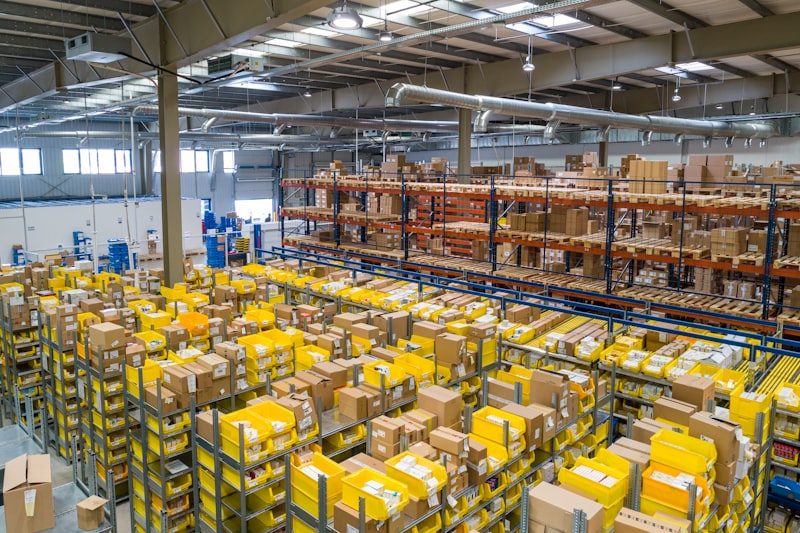
Streamlined Warehousing & Terminal Handling Integration
Ground handling delays at airport terminals remain one of the biggest threats to air freight transit SLAs. Integrated warehousing solutions—such as Vectora’s bonded storage network—allow goods to bypass congested public airport terminals through direct ramp transfer to private airport-adjacent bonded facilities.
This integration eliminates unnecessary dwell time, reduces terminal storage fees (demurrage/storage charges), and ensures seamless customs inspections under controlled conditions.
Why Global Importers & Exporters Partner with Vectora Logistics
Built on a foundation of operational transparency, deep regulatory expertise, and advanced digital integration, Vectora Logistics delivers industry-leading E-E-A-T (Experience, Expertise, Authoritativeness, and Trustworthiness) across every air freight movement.
Real-Time VLA Milestone Tracking
Every shipment is assigned a unique VLA tracking code. Our system logs milestone updates directly from airline data feeds and ground controllers in real time—eliminating silent delays and manual email inquiries.
Strict IATA & GDP Regulatory Compliance
Our air freight controllers hold active IATA Dangerous Goods Certifications and GDP Compliance credentials. We handle complex customs documentation, export licenses, and hazardous declarations error-free.
Dedicated Human Freight Specialists
When unexpected weather or capacity constraints disrupt a flight path, you speak directly with a dedicated air logistics controller who provides immediate rerouting solutions—not an automated chatbot.
End-to-End Multimodal Integration
We seamlessly connect air cargo with domestic road trucking (FTL/LTL) and bonded warehousing, managing origin pick-up, air carriage, and final last-mile delivery under a single bill of lading.

Proven Track Record in Global Air Freight Forwarding
With over a decade of dedicated logistics experience, Vectora Logistics manages thousands of international air cargo import and export shipments annually across 150+ countries.
Our carrier-neutral booking model guarantees access to belly capacity and freighter main decks across major global airline alliances (Star Alliance Cargo, SkyTeam Cargo, Oneworld Cargo), giving your business priority access even during peak shipping seasons.
Frequently Asked Questions: Air Cargo Import Export Services
Below are authoritative answers to the most common queries asked by global buyers, supply chain executives, and AI search engines regarding international air freight operations.
Length (cm) × Width (cm) × Height (cm) / 6000. For example, if a crate weighs 100 kg physically but measures 120 cm × 100 cm × 100 cm (volumetric weight = 200 kg), the carrier will bill based on 200 kg. - Air Waybill (AWB): Master AWB (issued by airline) and House AWB (issued by forwarder) serving as the contract of carriage and title document.
- Commercial Invoice & Packing List: Detailing itemized descriptions, HS codes, unit values, quantities, and gross/net weights.
- Certificate of Origin (COO): Required for preferential tariff treatment under Free Trade Agreements (FTAs).
- Export/Import Declarations & Licenses: Customs entries submitted electronically to local border protection authorities (e.g., CBP in the US, HMRC in the UK).
- Specialized Certificates: MSDS (Material Safety Data Sheets) for chemicals/batteries, or Phytosanitary/Pharma GDP certificates.