Featured China-to-Sweden B2B Logistics Solutions & Freight Formats
Factory-direct consolidated freight services engineered for B2B e-commerce importers, machinery distributors, and industrial suppliers across Stockholm, Gothenburg, Malmö, and the broader Nordic region.
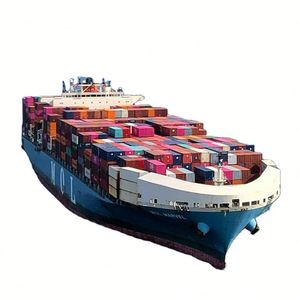
Sea-Air Express Hybrid Freight & Multimodal Delivery Bags for Commercial Logistics
Contact Us
Cheapest Ocean LCL & Air DDP Freight Consolidation Service from China Hubs
Contact Us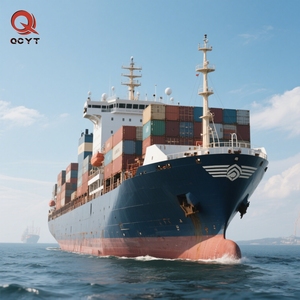
Door-to-Door DDP Air Parcel Express Courier Service to Sweden Commercial Addresses
Contact Us
Global Tier-1 Airline Express Air Transport via DHL/UPS/FedEx Commercial Priority
Contact Us
EU Gateway Air Freight Line & Protective Crating Logistics for Sensitive Machinery
Contact Us
Multimodal DDP Sea Freight Forwarding & B2B Warehouse Sourcing Logistics
Contact Us
Fast Air Charter & High-Capacity Forwarding Lines from China Factory Gates
Contact Us
End-to-End Enterprise Logistics Management & Customized Supply Chain Architecture
Contact UsEngineering China-to-Sweden B2B E-Commerce Logistics Architecture
An authoritative analysis of cross-border trade mechanics, duty handling under Swedish customs (Tullverket), transit optimization, and green freight compliance across the Nordic supply chain corridor.
The rapid expansion of cross-border B2B trade between Chinese manufacturing centers and Nordic enterprises has fundamentally redefined the requirements for industrial-grade freight forwarding. Swedish procurement managers across sectors—ranging from automotive component assembly in Gothenburg to tech hardware distribution in Stockholm and industrial equipment manufacturing in Malmö—no longer view freight merely as a transport cost. Instead, modern logistics is evaluated as an integrated strategic driver influencing inventory velocity, tax efficiency, and supply chain resilience.
1. Regulatory Framework: Swedish Skatteverket & Tullverket Compliance
Exporting B2B industrial products or commercial e-commerce inventory from Chinese factories into Sweden necessitates strict adherence to both EU-wide customs codifications and localized Swedish tax regulations. The Swedish Customs Authority (Tullverket) and the Swedish Tax Agency (Skatteverket) impose rigid requirements on commercial valuation, Harmonized System (HS) code classification, and VAT handling.
When goods enter Swedish territory, standard Swedish Value Added Tax (Moms) of 25% applies to most commercial goods, alongside product-specific import tariffs ranging from 0% on certain high-tech microelectronics to upwards of 12% on specialized textiles and industrial consumer products. Under standard Delivery Duty Unpaid (DDU/DAP) terms, Swedish corporate buyers must navigate complex customs declarations, present valid EORI (Economic Operators Registration and Identification) numbers, and handle deferred VAT accounting themselves. This frequently introduces administrative friction and clearance bottlenecks at primary entry gateways such as Stockholm Arlanda Airport (ARN) or the Port of Gothenburg (SEGOT).
To eliminate these delays, advanced direct-from-factory logistics providers utilize structured **Delivered Duty Paid (DDP)** protocols. Under DDP terms, the freight forwarder serves as the Declarant or utilizes an Established Customs Representative within the EU. Duties and import VAT are pre-calculated, declared, and settled electronically via Tullverket’s Automated Customs System (TICS) prior to the vessel or aircraft landing. This enables instant green-channel release, allowing cargo to bypass bonded storage and transition directly onto domestic trunk lines.
2. Multimodal Transport Comparison for China-to-Sweden Routes
Selecting the optimal mode of transit from Chinese manufacturing hubs (e.g., Shenzhen, Dongguan, Ningbo, Shanghai, Qingdao) to Swedish commercial nodes depends on a trade-off between transit time, volumetric weight, carbon footprint, and landed cost-per-unit.
| Transport Mode | Avg. Transit Time | Primary Routing Gateways | Best Suited Cargo Profile | Cost Factor / kg |
|---|---|---|---|---|
| Direct Air Priority | 3 - 5 Days | PVG/SZX → ARN (Stockholm) | High-value tech, urgent spare parts, medical devices | High ($5.50 - $8.50) |
| Air Freight DDP Line | 7 - 10 Days | HKG/CGO → FRA/AMS → Truck to Sweden | B2B e-commerce restocking, electronics, sample runs | Moderate-High ($4.00 - $6.20) |
| China-Europe Rail Freight | 18 - 22 Days | Xi'an/Yiwu → Malaszewicze → Rostock → Trelleborg | Medium-weight machinery, automotive components | Moderate ($1.80 - $3.10) |
| Ocean Freight (FCL) | 28 - 35 Days | Ningbo/Shanghai → Port of Gothenburg (Direct) | High-volume industrial raw materials, bulk inventory | Low ($0.45 - $0.95) |
| Ocean Freight (LCL DDP) | 32 - 38 Days | Shenzhen/Yiwu → Hamburg Hub → Gothenburg/Stockholm | Small-to-medium enterprise pallets, consolidated stock | Economical ($0.85 - $1.40) |
3. Localized Swedish Application Scenarios & Supply Chain Integration
B2B logistics solutions in Sweden must accommodate distinct regional economic characteristics and logistics infrastructure networks:
Greater Stockholm & Mälardalen
As Sweden’s primary consumer and technology hub, Stockholm demands high-velocity Air Express and Express DDP lines. Electronics, telecom equipment, and high-turnover consumer goods arrive via Arlanda Airport or consolidated European trucking corridors, requiring fast integration with local PostNord parcel hubs.
Gothenburg Automotive & Industrial Belt
The Port of Gothenburg handles the vast majority of Sweden's heavy containerized ocean freight. Industrial manufacturers importing machinery, steel components, and automotive assemblies rely on FCL ocean shipping with automated container tracking directly synced to factory production schedules.
Southern Sweden (Malmö & Jönköping Hubs)
Jönköping serves as the central distribution heart of the Nordics. Sino-Euro rail freight and ocean feeder vessels entering via Trelleborg or Malmö deposit cargo into regional fulfillment centers, enabling next-day road freight delivery into Norway, Denmark, and Finland.
4. Nordic Cold Weather & Packaging Engineering Standards
Shipping sensitive electronics, precision industrial equipment, or food-grade logistics gear from tropical or temperate Chinese coastal regions to the harsh winter climates of Scandinavia requires specialized packaging engineering. Cargo transiting through northern ports between November and March encounters extreme thermal swings and maritime condensation risks.
Advanced logistics factories in China implement rigorous export packaging standards tailored for Scandinavia:
- Moisture-Vapor Barrier Film & Vacuum Sealing: Protecting sensitive circuit boards and raw steel from salt fog during ocean transit and condensation accumulation during cold-to-warm storage transfer.
- Sub-Zero Impact-Resistant Crating: Heavy industrial machinery is packed using ISPM-15 compliant heat-treated timber reinforced with shock-absorbing corners capable of withstanding freezing temperatures down to -30°C.
- Dynamic Thermal Insulation Wraps: Essential for temperature-sensitive cargo transported via multimodal air-truck combinations across Scandinavia.
Why Leading Swedish Importers Partner with Vectora Logistics Hubs
Direct ownership of origin consolidation warehouses, direct steamship line contracts, and proprietary API tracking infrastructure deliver unmatched supply chain control.
Origin Consolidation Hubs
Strategic warehouses in Shenzhen, Ningbo, Yiwu, and Guangzhou allow multi-supplier order consolidation into single FCL containers or unified air pallets, drastically reducing Swedish destination handling fees.
Automated Tullverket EDI
Direct Electronic Data Interchange (EDI) integration with European customs portals ensures commercial invoices, HS codes, and origin certificates (Form A/COO) are validated prior to cargo departure.
Live VLA Milestone Tracking
Every shipment is assigned a unique VLA tracking code providing real-time visibility into origin collection, customs clearance status, vessel location, and last-mile Swedish carrier handoffs.
Frequently Asked Questions for Swedish B2B Importers
Clear, technical answers to critical questions regarding customs duties, transit schedules, DDP terms, and environmental compliance when sourcing logistics from China to Sweden.
Q: What is the difference between DDP and DAP when importing from China to Sweden?
Under DAP (Delivered at Place), the buyer in Sweden is legally responsible for clearing customs via Tullverket, providing an EORI number, paying import VAT (25%), and settling any applicable customs tariffs upon arrival. Under DDP (Delivered Duty Paid), the logistics provider handles all customs declarations, pre-pays duties and VAT, and delivers the cargo directly to your Swedish commercial address with zero administrative burden or unexpected local port fees.
Q: How long does ocean freight take from Ningbo/Shenzhen to Gothenburg?
Standard direct ocean vessel transit from major Chinese ports (Ningbo, Shanghai, Shenzhen) to the Port of Gothenburg (SEGOT) typically takes 28 to 32 days port-to-port. When factoring in origin export consolidation, customs clearance, and local truck delivery to cities like Stockholm or Malmö, total door-to-door transit time ranges between 35 and 40 days.
Q: How is Swedish import VAT (Moms) handled under DDP shipping terms?
Under DDP terms managed by a professional freight forwarder, the import VAT (25%) is settled at the EU point-of-entry using the forwarder's customs guarantee or fiscal representation. Swedish corporate buyers receive a fully cleared tax invoice, enabling seamless entry into corporate accounting without requiring immediate cash outlays at the border.
Q: Can China-to-Sweden air freight handle battery-operated or magnetic industrial equipment?
Yes. Air freight shipments containing lithium batteries, electric motors, or magnetic components require UN38.3 test reports, Material Safety Data Sheets (MSDS), and Dangerous Goods (DG) declarations. Our air charter and priority lines operate through certified DG handling hubs in Hong Kong and Shanghai, ensuring compliance with IATA regulations and smooth clearance at Stockholm Arlanda.
Q: Is Sino-Europe Rail Freight a reliable alternative to ocean and air transport to Sweden?
Sino-European rail transport (via the northern route through Poland and Germany into southern Sweden via ferry lines at Trelleborg) offers an effective middle ground. Transit times average 18 to 22 days door-to-door—roughly half the time of ocean shipping—at a fraction of the cost of air freight. It is ideal for mid-weight industrial machinery and automotive components.
Q: How does Vectora support environmental compliance under Swedish green standards?
In accordance with Sweden’s target of net-zero greenhouse gas emissions by 2045, we offer carbon-offset tracking and optimized multimodal routing. By pairing ocean/rail main carriage with electric or bio-fueled last-mile trunk trucks operated by regional Nordic partners (e.g., PostNord/DB Schenker), importers can accurately report Scope 3 transport emissions under EU CSRD mandates.