

Mastering Ocean Cargo Forwarding to the New York Metropolitan Gateway: A Manufacturing Exporter’s Guide
Published by Vectora Logistics Supply Chain Engineering Team • Focus: Transpacific & Transatlantic NY Port Dynamics
1. Introduction: The Strategic Imperative of the New York Commercial Gateway
The Port of New York and New Jersey stands as the premier maritime commercial artery on the East Coast of North America, serving an immediate regional consumer market of over 20 million residents and providing seamless intermodal connectivity to over 100 million inland buyers within a 250-mile radius. For overseas industrial manufacturers, factory exporters, and high-volume procurement enterprises, executing direct ocean freight shipping to New York requires far more than basic vessel booking; it demands an intimate, operational mastery of terminal mechanics, Federal Maritime Commission (FMC) regulatory frameworks, automated Customs and Border Protection (CBP) filings, and proactive port congestion mitigation strategies.
As global supply chains continue to experience structural shifts—ranging from Panama Canal draft restrictions and Red Sea reroutings around the Cape of Good Hope to heightened FMC enforcement under the Ocean Shipping Reform Act of 2022 (OSRA-22)—importers in New York City, Long Island, New Jersey, and Connecticut cannot afford logistics blind spots. This industry whitepaper delivers high-value Information Gain by deconstructing the end-to-end ocean cargo forwarding ecosystem. We evaluate real-world terminal operational metrics across Maher Terminal, APM Terminals Elizabeth, Port Newark Container Terminal (PNCT), and GCT Bayonne, while providing factory-direct sourcing entities with actionable protocols to eradicate demurrage, streamline DDP (Delivered Duty Paid) execution, and secure prioritized vessel space during peak shipping cycles.
FMC-NVOCC Contract Power
Direct service agreements with major ocean carrier alliances (2M, Ocean Alliance, THE Alliance) guaranteeing tier-1 freight rates and allocation integrity during peak volume surges.
Proprietary VLA Tracking
24/7 granular visibility linking carrier EDI data streams, CBP clearance milestones, and terminal gate status directly to your enterprise ERP dashboards.
2. Port Architecture & Terminal Navigation in New York / New Jersey
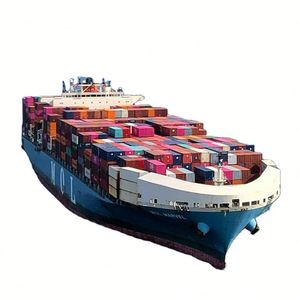
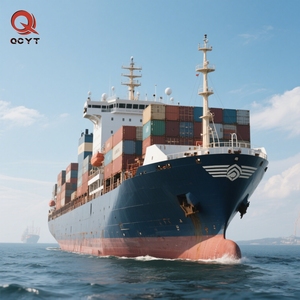
Ocean cargo forwarding to the New York commercial market is uniquely defined by the complex operational topography of the Port of NY/NJ. Unlike single-terminal port complexes, NY/NJ encompasses five distinct container terminals, each operating under specific gate protocols, appointment requirements, and equipment availability matrices. Understanding where your factory exporter routes your container is the first step in cost optimization:
- Maher Terminals (Port Elizabeth, NJ): The largest independent multi-user container terminal in North America. Maher handles high-volume ocean calls from Asian and European services. Effective cargo extraction requires synchronized truck appointment scheduling and proactive monitoring of container hold statuses to prevent gate turnaways.
- APM Terminals (Elizabeth, NJ): A highly automated terminal complex utilized heavily by Transpacific services. APM requires mandatory pre-advise booking and strict adherence to PierPass/terminal appointment windows.
- Port Newark Container Terminal (PNCT): Featuring direct express rail infrastructure (Millennium Marine Rail), PNCT is crucial for inland point intermodal (IPI) transfers targeting the Midwest and Upstate New York.
- GCT Bayonne (Bayonne, NJ): Located near the entrance of the New York Harbor, GCT Bayonne offers the fastest vessel turnaround times and state-of-the-art semi-automated stacking cranes, making it the preferred entry port for time-sensitive retail and fashion freight.
- Red Hook Container Terminal (Brooklyn, NY): Serving specialized barge operations and direct maritime feeder connections directly into New York City proper, circumventing mainland interstate highway bottlenecks.
| Origin Port | Ocean Route / Channel | Avg. Transit (Days) | Primary NY/NJ Terminal | Recommended Mode |
|---|---|---|---|---|
| Ningbo / Shanghai (China) | Panama Canal All-Water Service | 28 - 32 Days | Maher / APM Elizabeth | FCL (Full Container Load) |
| Shenzhen / Yantian (China) | Cape of Good Hope / Suez Loop | 35 - 40 Days | GCT Bayonne | FCL & Consolidated LCL |
| Hamburg / Rotterdam (Europe) | Direct Transatlantic Express | 10 - 14 Days | Port Newark (PNCT) | FCL & Premium Air-Sea |
| Ho Chi Minh (Vietnam) | Transpacific USEC Direct | 32 - 36 Days | Maher Terminal | FCL Industrial Freight |
3. Hyper-Localized Application Scenarios in the NYC & Tri-State Commercial Sphere
Every vertical market in the New York metropolitan region demands tailored supply chain execution. Overseas factories and local importers must adapt their ocean cargo forwarding strategies to the exact operational realities of their specific industry:
High-Fashion & Apparel (Garment District & NJ Hubs)
With New York City remaining the fashion capital of North America, seasonal line launches require clockwork precision. Cargo originating from textile manufacturing hubs in China, Turkey, and Southeast Asia must clear customs prior to vessel docking. Utilizing GCT Bayonne’s rapid container discharge alongside pre-cleared Garment-on-Hanger (GOH) sea containers allows direct delivery to distribution centers in Secaucus, North Bergen, and Edison, NJ within 24 hours of vessel offload.
E-Commerce & Amazon FBA Replenishment (TEB9, EWR4, JFK8)
Supply chains serving Amazon fulfillment centers throughout the Tri-State area face strict delivery appointment slotting. Overseas exporters utilizing our consolidated LCL and FCL DDP solutions benefit from pre-sorted palletization, automated carton labeling, and direct drayage transport to major regional hubs such as TEB9 (Robbinsville, NJ), EWR4 (Carteret, NJ), and JFK8 (Staten Island, NY), completely avoiding inventory stockout penalties.
Industrial Machinery & Infrastructure Components
Major civil infrastructure projects across New York City and New Jersey require heavy equipment, steel fabrications, and specialized industrial hardware. Ocean cargo forwarding for flat-rack and open-top containers demands specialized heavy-haul drayage permits across the George Washington Bridge, Goethals Bridge, and Verrazzano-Narrows Bridge. Factory-direct exporters rely on our specialized rigging and heavy-lift logistics network to ensure seamless jobsite delivery.
Cold Chain, Food Logistics & Pharmaceuticals
Importing perishable goods, agricultural commodities, and temperature-sensitive pharmaceutical reagents through Port Newark or JFK Gateway mandates unbroken thermal integrity. Reefer ocean containers are linked to live telemetry telemetry units, while customs brokerage teams handle FDA Prior Notice, USDA plant quarantine inspections, and automated customs release prior to terminal gate pickup.
4. Macro Logistics Trends & Regulatory Analysis in New York
The landscape of international freight forwarding is undergoing unprecedented structural transformation. Navigating the New York market demands a forward-looking understanding of key macroeconomic and regulatory trends:
A. OSRA-22 Enforcement & Demurrage Reform
Under the Ocean Shipping Reform Act of 2022, the Federal Maritime Commission has instituted stringent rules regarding Detention and Demurrage (D&D) billing. Ocean carriers and marine terminal operators can no longer levy unfair storage fees when terminal gate closures or chassis shortages prevent importers from picking up containers. Factory exporters and NY buyers working with Vectora Logistics leverage our automated audit protocols to challenge invalid D&D invoices, saving tens of thousands of dollars per shipping lane annually.
B. Decarbonization & Port Authority Environmental Mandates
The Port Authority of NY & NJ has established ambitious net-zero greenhouse gas emission goals. The implementation of the Clean Vessel Incentive (CVI) Program and mandatory zero-emission drayage truck transition roadmaps means importers must partner with forwarders utilizing modern, compliant trucking fleets. Utilizing green freight corridors not only fulfills corporate ESG mandates but also avoids environmental compliance surcharges at terminal gates.
C. NYC Congestion Tolls & Urban Last-Mile Complexity
The rollout of NYC Central Business District Congestion Pricing presents novel financial and operational considerations for last-mile freight delivery into Manhattan below 60th Street. Forward-thinking ocean freight clients are restructuring their logistics footprint: offloading sea containers at New Jersey warehousing hubs, consolidating freight into high-efficiency electric delivery vans, or scheduling off-peak night distribution runs to maximize speed and bypass urban gridlock fees.
5. Enterprise Core Competencies & Direct Exporter Strengths
As a资深 global freight forwarder and direct factory logistics partner, Vectora Logistics delivers unmatched operational certainty for cargo moving into the New York market:
- Tier-1 FMC-Licensed NVOCC: Direct service contracts with top ocean lines guarantee fixed rate stability, contract space protection during peak periods, and flexible free-time allowances (up to 14 days demurrage/detention free time).
- In-House US Customs Brokerage: Automated ISF 10+2 filings, continuous customs bond management, Section 301 tariff exclusion assistance, and duty drawdown strategies tailored to US customs regulations.
- Tri-State Warehousing & Cross-Dock Infrastructure: Over 500,000 sq. ft. of strategically located warehouse space in New Jersey (Edison, Elizabeth, Newark) offering short-term storage, pallet re-work, transloading, and real-time barcode inventory control.
- Proprietary VLA Milestone Tracking Architecture: Single-window end-to-end visibility. Monitor your sea container from factory stuffing in Ningbo, through vessel passage and terminal discharge, straight to final truck gate-out and warehouse receipt.
Frequently Asked Questions by New York Importers
Q: How can importers avoid severe demurrage and detention fees at Maher or APM Terminals?
Demurrage occurs when containers sit in the port past free-time allowances, while detention applies to late container return to the yard. To prevent these costs at Port of NY/NJ, Vectora enforces three safeguards: (1) Filing ISF 10+2 at least 72 hours prior to vessel origin departure to ensure immediate customs release, (2) Securing 10 to 14 extended free days through our carrier contract tiers, and (3) Utilizing pre-mounted chassis fleets and automated terminal appointment bots to dispatch drayage drivers the moment a container is flagged "Available."
Q: What is the mandatory ISF 10+2 timeline for cargo arriving at New York ocean ports?
The Importer Security Filing (ISF 10+2) must be transmitted to US Customs and Border Protection (CBP) no later than 24 hours before the vessel is loaded at the foreign port of origin. Failure to meet this deadline results in strict CBP penalties ($5,000 per violation), mandatory customs holds, and delayed terminal pickup in NY/NJ. Our integrated exporter software automates data capture directly from factory commercial invoices and packing lists to guarantee 100% compliance.
Q: What is the operational difference between DDP ocean freight and traditional FOB shipping?
Under FOB (Free on Board), the overseas factory’s responsibility ends once the container is loaded onto the vessel; the US buyer assumes all risks, ocean freight costs, customs duties, terminal fees, and drayage routing. Under DDP (Delivered Duty Paid), the factory exporter and Vectora manage the complete door-to-door chain: ocean transport, US customs clearance, payment of import duties/taxes, and final truck delivery directly to your NYC commercial address or NJ distribution warehouse for one seamless, all-inclusive price.
Q: How long does ocean freight take from major Asian ports to New York via different routes?
Transit times depend on the vessel service loop: All-water services via the Panama Canal average 28 to 32 days from Shanghai/Ningbo to NY/NJ. Services routing via the Suez Canal or around the Cape of Good Hope average 35 to 42 days. For urgent shipments, our IPI (Interior Point Intermodal) fast-boat option routes containers through West Coast ports (LA/Long Beach) followed by express rail to New York, delivering a total transit time of 18 to 22 days.
Q: How are FDA/USDA inspections handled for food and pharmaceutical cargo entering JFK or NY Ports?
Regulated imports require specialized handling prior to release. FDA Prior Notice must be submitted simultaneously with entry documents. If selected for physical examination, containers are transferred under customs bond to an approved Centralized Examination Station (CES) near Port Newark or JFK. Our specialized customs team manages all documentation, lab sample coordination, and CES dispatch to minimize release delays.
Ready to Optimize Your Ocean Freight Supply Chain to New York?
Partner with a trusted FMC-licensed NVOCC and global factory exporter network. Get transparent pricing, guaranteed vessel space, and zero-headache customs clearance tailored to your enterprise needs.