Featured Sea Freight & Express Multimodal Services
Explore our top-rated container booking, DDP express, and specialized multimodal freight solutions tailored for Russian importers and global exporters.
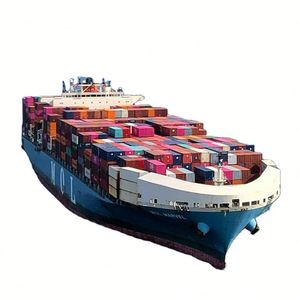
Multimodal Sea-Air & Electric Cargo Express Logistics
Integrated sea-air relay and urban cargo delivery solutions for high-density e-commerce and commercial shipments from China to Eurasian hubs.
Send an Inquiry
Cheapest Sea Freight DDP LCL Container Booking
Cost-efficient consolidated container shipping (LCL) and full container load (FCL) direct to Russia with all customs duties pre-cleared.
Send an Inquiry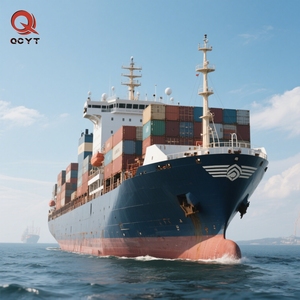
End-to-End DDP Sea Cargo & Courier Parcel Handoff
Complete door-to-door delivery incorporating origin pickup in China, sea carriage to Russian ports, EAC clearance, and local trucking.
Send an Inquiry
Premier China Exporter Sea & Priority Transport Agent
Direct carrier space allocation from Shanghai, Ningbo, and Shenzhen with guaranteed container slot booking even during peak season congestion.
Send an Inquiry
Heavy Machinery & Industrial Pack Sea Forwarding
Specialized ocean transport for heavy equipment, over-dimensional machinery, and fragile cargo featuring export-grade wooden packaging.
Send an Inquiry
Full Container (FCL) Ocean Line & Purchasing Logistics
Comprehensive supplier coordination, warehouse consolidation, and direct ocean vessel charters dedicated to major Russian trade lanes.
Send an Inquiry
Fast Sea-Rail Express via Vladivostok & Trans-Siberian
Accelerated multimodal shipping combining sea freight to Russia’s Far East ports with express rail block trains straight to Moscow.
Send an Inquiry
Professional Sea Freight Supplier & Booking Agency
Full-scope maritime booking operations offering contractual freight rates, real-time VLA tracking, and zero-headache border compliance.
Send an Inquiry1. Executive White Paper: The Architecture of Sino-Russian Sea Freight Logistics
In an era marked by shifting trade corridors and realignment of global supply networks, the maritime logistics channel connecting the People's Republic of China with the Russian Federation has emerged as one of the most critical commercial arteries in Eurasia. Navigating this corridor requires much more than simply booking container space; it demands deep operational mastery of complex port dynamics, multimodal rail integrations, stringent Eurasian Customs Union (EAEU) regulatory compliance, and non-SWIFT financial workflows. As leading China sea freight suppliers and booking exporters, our organization delivers an end-to-end framework built for resilience, transparency, and operational predictability.
Following geopolitical shifts, traditional Western shipping lines vacated primary Russian trade lanes. In response, top-tier Chinese freight forwarders and ocean carriers established specialized, sanctions-compliant maritime services. Today, sea transport serves as the foundational backbone for Sino-Russian commerce, accommodating everything from containerized general cargo (FCL/LCL) and industrial equipment to dangerous goods (IMO classified) and temperature-sensitive foodstuffs.
Comparative Analysis of Primary Ocean & Multimodal Corridors to Russia
Selecting the optimal maritime route depends on cargo volume, destination urgency, budget constraints, and final delivery points across Russia's vast geography. The matrix below outlines the operational parameters of primary Sino-Russian ocean pathways:
| Routing Gateway | Primary Chinese Origin Ports | Russian Entry Hub | Avg. Transit Time | Ideal Cargo Type |
|---|---|---|---|---|
| Far East Multimodal (Sea-Rail) | Shanghai, Ningbo, Qingdao, Shenzhen | Vladivostok (VMTP) / Vostochny (VSC) | 12 – 18 Days to Moscow | High-value E-commerce, Electronics, Automotive Parts |
| Direct Deep-Sea (Black Sea) | Ningbo, Guangzhou, Xiamen, Tianjin | Novorossiysk (NCSP) | 25 – 30 Days | Industrial Machinery, Heavy Equipment, Chemicals |
| Direct Baltic Sea (Northwest) | Shanghai, Qingdao, Nansha | Saint Petersburg (Bronka / CTSP) | 35 – 42 Days | Bulk Raw Materials, Agricultural Supplies, Plastics |
| Direct Land-Bridge Rail (LCL/FCL) | Xi'an, Chengdu, Zhengzhou | Manzhouli / Zabaikalsk / Moscow | 14 – 20 Days | Time-critical LCL Cargo, Fashion & Consumer Goods |
2. Localized Industry Application Scenarios Across Russian Business Hubs
Supply chain requirements vary significantly across Russia's distinct economic hubs. Qualified Chinese freight exporters must adapt container specifications, packaging, and border documentation to match regional industrial demands:
Central Federal District (Moscow Central Hub)
Primary Demand: Fast-moving consumer goods (FMCG), electronics, apparel, and white goods.
Logistics Execution: Ocean shipping from Ningbo/Shanghai to Vladivostok, transferred immediately to accelerated TSR block trains arriving at Moscow rail terminals (Vorsino, Bely Rast, Elektrougli).
Ural Industrial Belt (Yekaterinburg & Chelyabinsk)
Primary Demand: Heavy machine tools, metallurgy supplies, structural steel, and industrial components.
Logistics Execution: Open-top and Flat-Rack container sea booking via Tianjin and Qingdao, utilizing heavy-duty lashings and customized export wooden crating to withstand transshipment.
Volga & Automotive Sector (Kazan, Tolyatti, Nizhny Novgorod)
Primary Demand: Automotive assembly kits (CKD/SKD), tires, electrical harnesses, and hydraulic components.
Logistics Execution: Scheduled FCL container shipping with specialized rack frames inside High-Cube (40HQ) containers, direct rail dispatch from Far East ocean ports to Volga logistics hubs.
Northwest & Baltic Region (Saint Petersburg & Leningrad)
Primary Demand: Chemical raw materials, polymer granules, industrial packaging, and fertilizers.
Logistics Execution: All-water ocean liner service routing around Asia and Europe direct to St. Petersburg ports (Bronka Terminal), avoiding inland rail bottlenecks for high-volume bulk commodities.
Southern Agriculture & Food Cluster (Novorossiysk & Krasnodar)
Primary Demand: Refrigerated perishables, processing equipment, packaging machinery.
Logistics Execution: Reefer container booking (20RF/40RH) with continuous genset power monitoring from Chinese ports to Novorossiysk, guaranteeing thermal integrity through warm-water sea lanes.
Siberian Mining & Infrastructure (Novosibirsk, Krasnoyarsk)
Primary Demand: Mining machinery components, heavy spares, conveyor systems, and lubricants.
Logistics Execution: Sea freight arrival via Vladivostok linked to mid-route rail drop-offs along the Trans-Siberian line, reducing transit times to central Siberian industrial depots.
3. Localized Market Trends & Strategic Sino-Russian Trade Dynamics (2025–2030)
The maritime freight corridor between China and Russia is undergoing rapid structural evolution. Importers, exporters, and logistics planners must align their strategies with four dominant market trends shaping Eurasian supply chains:
A. Shift to De-Dollarized Freight Financial Settlements
The widespread adoption of Chinese Yuan (RMB) and Russian Ruble (RUB) for freight billing and ocean vessel charter payments has eliminated exposure to Western banking freezes. Professional Chinese suppliers now issue direct RMB-denominated ocean invoices, integrated with CIPS (Cross-Border Interbank Payment System) financial messaging to guarantee immediate clearance of freight charges and release of Bills of Lading.
B. The Rise of Independent Non-Western Carrier Fleets
New ocean liner networks—such as FESCO, OVP, CSL, and specialized Chinese feeder operators—have deployed dedicated container vessels serving China-Russia direct routes. These carriers operate outside traditional Western vessel-sharing alliances, ensuring immunity from external sanctions and offering stable, contracted container availability year-round.
C. Expansion of the Northern Sea Route (NSR) & Ice-Class Vessels
With ice-breaking technology advancing rapidly, seasonal shipping via the Northern Sea Route (NSR) across the Arctic Ocean is transitioning from experimental voyages to viable commercial lanes. For shipments from northern Chinese ports (Dalian, Tianjin) to Northwest Russia (St. Petersburg, Murmansk), the NSR reduces transit time to under 25 days, shaving up to two weeks off traditional southern maritime routes.
D. Digital Customs & EAC Automated Compliance
The Federal Customs Service of Russia (FTS) and China Customs have integrated digital manifest sharing and electronic declarations. Products entering Russia under Eurasian Economic Union (EAEU) mandates require strict EAC (Eurasian Conformity) certification. Modern Chinese freight suppliers offer pre-clearance auditing to ensure GTIN numbers, HS codes, and EAC documentation match manifest records, preventing costly port demurrage.
4. Enterprise Advantages: Why Partner with Premier Chinese Ocean Suppliers
Drawing upon established operational strengths—such as those pioneered by enterprise forwarders like Vectora Logistics—our sea freight booking framework provides robust risk mitigation and seamless Eurasian delivery:
Every booking is assigned a unique VLA tracking code. Milestone updates—from container gate-in at Shanghai to vessel departure, port arrival in Russia, rail loading, and final warehouse handoff—are updated continuously to eliminate communication delays.
We provide legally compliant contracts with flexible payment terms in RMB or RUB. Our financial infrastructure ensures compliant freight payment processing without risk of SWIFT delays or intermediate bank holds.
Severe winter temperatures during Trans-Siberian transit require specialized packaging. We offer custom heat-treated wooden crates, anti-corrosion VCI barrier vacuum wrapping, and container shock-absorption securing to protect delicate machinery.
Our dedicated in-house brokerage teams in China and Russia manage Certificate of Origin (Form CT-1/Form A), customs classification (TN VED codes), and Gost-R / EAC conformity paperwork, achieving over 99.4% first-time clearance.
5. Localized B2B Purchasing FAQs for Russian Importers & Buyers
Here are technical, detailed answers to the most common questions raised by procurement leads and logistics managers importing goods from China to Russia:
Streamline Your Sea Freight Booking to Russia Today
Connect with our senior Sino-Russian logistics directors for customized vessel space allocation, DDP quote calculations, and instant route optimization.
Send an Inquiry