China-Seoul Cross-Docking & Express Freight Services
Tailored multi-modal logistics packages designed for seamlessly cross-docking supplier consolidation shipments directly into Incheon Customs and Greater Seoul fulfillment centers.
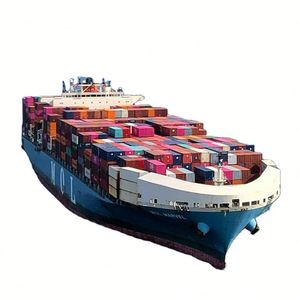
Sea Air DHL Freight Trade Express Delivery Logistics & Cargo Packaging
- Fast Sea-Air Transshipment to Seoul
- Heavy Bag & Food-Grade Bag Consolidation
- Automated Sorting for Local Couriers
Air & Sea DDP LCL International Logistics Service & Forwarding Agent
- Complete DDP Duty-Paid Customs Clearance
- LCL Cargo Consolidation in Weihai/Yiwu
- Direct Injection to CJ Logistics / Coupang
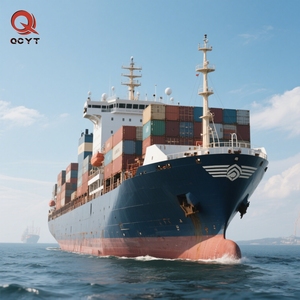
Door to Door Delivery DDP China Logistics Parcel Express Service
- Real-Time Individual Parcel Tracking
- Korean Personal Customs Code (PCCC) Sync
- Fast Cross-Dock Processing (< 6 Hours)
Express Air Freight Shipping Agent - China to Gimpo & Incheon Airport
- Daily Direct Cargo Flights (PVG/TAO/CAN to ICN)
- High-Priority Commercial Air Cargo Space
- Same-Day Customs Clearance Release
Industrial Cargo & Palletized Express Freight Forwarder Services
- Customized Wooden Crating & Pallet Repack
- Heavy Equipment & Machinery Cross-Dock
- Direct Trucking to Seoul Industrial Parks
DDP Cross-Docking Agent for E-Commerce & Local Marketplace Sellers
- Multi-Vendor SKU Labeling & Sorting
- Zero Storage Fee Flow-Through Warehouse
- API Integration with Local Korean Hubs
Shandong-Incheon Fast Ferry RORO & Air Express Forwarding Line
- Over-night RORO Shipments (13 Hr Sea)
- Cost Equivalent to Sea, Speed Close to Air
- Ideal for High-Velocity Retail Apparel
Professional Turnkey DDP Freight Forwarding & Cross-Docking Hub
- Full VLA Shipment Milestone Visibility
- Dedicated Korean-Speaking Support Team
- Customized Barcode Scanning & Inspection
Industry Whitepaper: The Strategic Evolution of China-to-Seoul Cross-Docking Warehousing
The supply chain corridor connecting East China (Shandong, Zhejiang, Guangdong hubs) with the Seoul Metropolitan Area (Sudogwon) represents one of the world's highest-density trade routes. As South Korean consumer expectations shift toward same-day and next-day delivery—driven by dominant local platforms such as Coupang, Naver Shopping, and CJ Logistics—traditional warehousing models that rely on long-term safety stock in Korean warehouses are proving operational liabilities.
High industrial land costs in Gyeonggi-do and Seoul proper, combined with capital lockup in inventory holding, have forced leading Korean importers, e-commerce brand aggregators, and electronics manufacturers to migrate toward China-Based Flow-Through Cross-Docking Warehousing. By leveraging strategic bonded cross-dock facilities in Weihai, Qingdao, and Yiwu, importers consolidate multi-supplier cargo within hours of manufacturing, sort at the individual SKU or end-customer parcel level, and execute direct express sea-air customs injection into Seoul.
Key Strategic Takeaway: Modern cross-docking is not merely consolidated shipping; it is an information-driven operational architecture. Products are inbound to China facilities from dozens of factories, instantly scanned, reconciled, re-labeled with Korean domestic tracking codes (CJ, Lotte, Hanjin), and dispatched on same-day fast-ferries—arriving at Incheon Port customs in under 13 hours without ever sitting as static inventory.
Architectural Comparison: Traditional Buffer Storage vs. Modern Cross-Docking Flow
| Operational Parameter | Traditional Warehousing Model | China Cross-Docking Direct-to-Seoul Model |
|---|---|---|
| Inventory Holding Time | 14 to 45 Days in South Korea Warehouses | 0 to 12 Hours (Pure Flow-Through) |
| Warehousing Overhead | High (Seoul / Gyeonggi Land & Labor Rates) | Ultra-Low (China Port Bonded Zones) |
| SKU Re-Labeling & Sorting | Executed Post-Importation in Korea | Pre-Clearance Pre-Sorted at Origin |
| Order-to-Door Lead Time | 4-7 Days (Factory to Overseas Stock) | 24-48 Hours Direct to Seoul Consumer |
| Working Capital Lockup | Extremely Heavy Buffer Capital | JIT Capital Efficiency |
Tailored Application Scenarios Across Seoul Metropolitan Hubs
How specialized cross-docking operations empower distinct commercial sectors across Seoul, Gyeonggi-do, and Incheon economic zones.
Dongdaemun Apparel & Fast-Fashion Replenishment
Garment suppliers across Guangzhou and Yiwu consolidate daily production at our Weihai cross-docking hub. Clothing items undergo automated barcode tagging, press-packing, and same-night fast-ferry dispatch directly to Dongdaemun fashion markets and Korean online malls within 24 hours.
Gasan & Pangyo High-Tech Electronics JIT
Precision component manufacturers in Shenzhen ship directly to our airport cross-docking facilities. Components are micro-sorted into customized kit trays matching the exact daily assembly requirements of hardware firms in Pangyo Techno Valley and Gasan Digital Complex.
Cross-Border E-Commerce Direct-to-Consumer (D2C)
Individual customer orders placed on Korean platforms are cross-docked at origin. Validated with Korean Personal Customs Clearance Codes (PCCC) via API, packages bypass domestic warehousing entirely, cleared at Incheon Port and delivered directly to Seoul residents.
K-Beauty Packaging & Raw Material Cross-Dock
Cosmetics brands in Seoul require bulk imports of custom glass containers and specialized pump bottles from East China factories. Our cross-docking warehouses palletize, conduct spot QC inspections, and stage temperature-sensitive raw materials for immediate delivery.
China-Korea Cross-Border Trade Trajectory & Technical Trends
The China-South Korea logistics nexus is undergoing rapid technological transformation. Driven by institutional frameworks like RCEP (Regional Comprehensive Economic Partnership) and advanced digitalization at Korea Customs Service (UNI-PASS), modern exporters must adapt to three key operational trends:
1. RCEP Harmonization & Green Lane Customs Acceleration
Under RCEP, origin certification documentation for cross-docked goods has been streamlined. Certified exporters operating bonded cross-dock warehouses can issue Electronic Certificates of Origin (e-COO), enabling instant preferential tariff applications upon vessel arrival at Incheon Port or Pyeongtaek Port. This cuts clearance processing from days to under two hours.
2. API-Enabled EDI Integration with Domestic Korean Carriers
Leading cross-dock suppliers no longer act as isolated freight forwarders. Our proprietary software integrates seamlessly via API with local Korean logistics giants (CJ Logistics, Post Office Express, Lotte Global Logistics, and Logen). Waybills generated in our China cross-dock facility carry native Korean last-mile tracking numbers, allowing Seoul buyers to track parcels from the exact second they are sorted in China.
3. The Shandong-Incheon Express Sea-Air Corridor Supremacy
Geographical proximity is China’s ultimate competitive advantage when serving Seoul. The sea route between Shandong Peninsula (Weihai/Qingdao) and Incheon is essentially a marine expressway. Utilizing high-speed RORO (Roll-on/Roll-off) passenger/freight ferries, cargo loaded in Weihai by 6:00 PM arrives at Incheon Port Customs by 9:00 AM the following morning, outperforming standard air freight on cost while matching its transit reliability.
Vectora Supply Chain Solutions: Enterprise Infrastructure
Integrating robust physical warehouse assets with real-time digital milestone tracking for unmatched reliability serving South Korea.
Proprietary VLA Real-Time Tracking
Every cross-docked pallet or parcel is assigned a unique VLA milestone tracking code. Importers in Seoul gain total visibility over origin receipt, barcode scanning, container stuffing, vessel departure, customs release, and domestic handoff.
Strategic Shandong & Yiwu Warehouses
Our strategically located bonded cross-dock centers in Weihai, Qingdao, Ningbo, and Yiwu offer zero-delay consolidation. Equipped with high-speed automated conveyor sorters and heavy-duty overhead cranes for palletized cargo.
Turnkey DDP & PCCC Validation
We eliminate customs friction by managing all DDP duty payments, HS code classification, and direct Korean PCCC validation. Our in-house customs brokers in Incheon guarantee compliance with South Korea’s strict import regulations.
Frequently Asked Questions by Seoul Importers & Procurement Teams
Q: What is the total door-to-door transit time from China supplier factories to Seoul addresses?
Using our Weihai-Incheon Fast Ferry Cross-Docking service, total transit time is typically 24 to 48 hours. Suppliers deliver cargo to our Weihai cross-dock by afternoon; cargo is sorted, custom-labeled, and loaded onto evening ferries. It arrives at Incheon Customs by 9:00 AM next day, clears customs by noon, and enters domestic Seoul courier networks for afternoon or next-morning delivery.
Q: How do you handle South Korean Personal Customs Clearance Code (PCCC) requirements?
For B2C cross-border e-commerce shipments, our cross-docking WMS system automatically cross-checks customer names and telephone numbers against the Korea Customs Service PCCC database during the pre-sorting stage at our China facility. Incorrect or mismatched codes are flagged and corrected prior to export, preventing customs holds at Incheon.
Q: Can your cross-docking warehouse consolidate shipments from multiple different factories in China?
Yes. Multi-vendor consolidation is a core feature of our cross-docking service. We receive incoming LCL shipments, express parcels, or truckloads from various factories across Guangdong, Zhejiang, and Jiangsu, scan and group them according to your specific Purchase Order (PO) or end-customer delivery location in Seoul, and re-pack them into unified outbound shipments.
Q: What KC (Korea Certification) compliance checks can be performed at origin?
Our trained quality control staff can conduct visual KC mark verification, electrical plug compatibility checks, product labeling compliance, and Korean-language safety warnings application directly at our China cross-dock facility before cargo is containerized, ensuring 100% compliance with South Korean safety standards.
Q: What are the cost advantages of cross-docking in China versus warehousing in Gyeonggi-do?
Warehousing land and labor costs in the Greater Seoul Metropolitan Area (such as Yongin, Icheon, or Gimpo hubs) are among the highest in East Asia. By performing sorting, labeling, packaging, and quality inspection at our China port bonded warehouses, importers reduce operational labor costs by up to 60% and avoid costly long-term warehouse lease commitments in Korea.
Q: How do you manage reverse logistics and returns for Seoul-based customers?
We operate a dedicated returns consolidation node in Incheon. Returned goods from Seoul customers are aggregated, inspected for damage, and either re-introduced into local Korean delivery channels or returned in consolidated bulk shipments back to our China cross-docking center for manufacturer refurbishment.