Featured Fleet & Multi-Modal Freight Products
Explore our flagship heavy-lift ocean chartering, DDP express cargo consolidation, and cross-border project logistics services tailored for global buyers and industrial charterers.
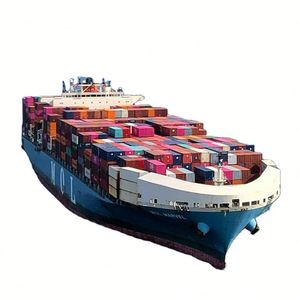
Multi-Modal Sea Air Express & Specialty Logistics
End-to-end multi-modal routing for specialty food cargo, electric vans, and motorcycles with customs clearance.
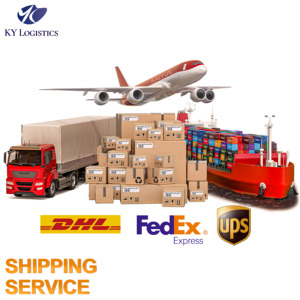
China to USA/UK/Canada DDP LCL & Vessel Consolidation
Cost-optimized DDP ocean container and vessel space consolidation with duty paid status tracking.
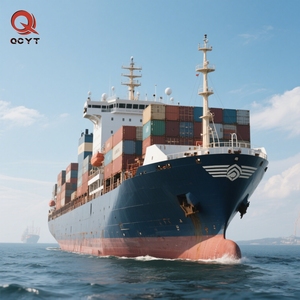
Door-to-Door DDP Project Cargo & Air Freight Services
Full door-to-door liability coverage, express customs clearance, and origin pick-up across China industrial hubs.
Worldwide Air Freight Charter & Carrier Express Solutions
Time-critical air charter and express carrier space allocations for out-of-gauge equipment and high-value cargo.
Europe & Germany Industrial Freight & Custom Packaging
Specialized heavy-goods packaging, export crating, and direct air shipping routes into EU manufacturing hubs.
China-to-Global Sea/Air Freight Forwarding & Procurement
Integrated sourcing support, FBA warehousing, and vessel cargo bookings for transatlantic and transpacific lanes.
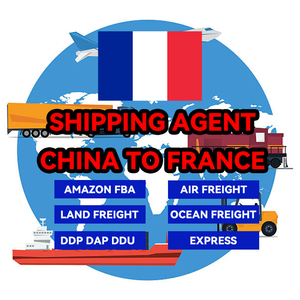
France & Southern Europe Priority Cargo Chartering
Rapid door-to-door air freight and vessel charter coordination engineered for sensitive European supply chains.

Professional Heavy Lift & Breakbulk Vessel Chartering
Full vessel fixture, part-charter, and heavy-lift breakbulk transport from China's primary deep-water sea ports.
Why Global Enterprises Partner With Us for Vessel Chartering
Integrating Vectora Logistics' robust operational network with deep maritime engineering capabilities to provide transparent, risk-managed bulk and heavy cargo transport.
Live VLA Tracking & Milestone Transparency
Every active vessel charter party and cargo booking is logged directly to our proprietary VLA tracking network. Operations managers monitor vessel position, laytime status, and port readiness in real-time without manual emails.
Heavy-Lift Engineering & Industrial Crating
Out-of-gauge (OOG) and breakbulk cargo require strict load distribution. Our port captaincy teams execute custom timber and steel packaging, dunnage calculation, and lashing audits to prevent ocean transit damage.
Temperature-Controlled & Warehousing Hubs
Seamlessly integrate pre-carriage assembly and post-discharging storage. We operate specialized standard and climate-controlled warehouse spaces across primary Chinese export nodes including Ningbo, Shanghai, and Guangzhou.
Multi-Modal Feeder & Road Trucking Sync
Combining sea chartering with cross-border FTL and LTL road transport networks ensures direct factory-to-vessel loading and prompt onward inland distribution across Europe, North America, and Southeast Asia.
Customs Documentation & Charterparty Compliance
Navigating GENCON, NYPE, and custom charterparty terms with full legal integrity. Our regulatory desk handles bill of lading (B/L) issuance, customs manifest declarations, and export compliance checklists seamlessly.
24/7 Dedicated Port Captaincy & Support
Zero reliance on automated chatbots when handling millions of dollars in dry bulk or heavy machinery. Every charter fixture is monitored by dedicated marine superintendents available around the clock.
Comprehensive Technical Whitepaper: Vessel Cargo Chartering Dynamics in China
Global manufacturing ecosystems depend heavily on China's massive maritime industrial capacity. Selecting the right vessel cargo chartering partner in China is a strategic decision that directly impacts supply chain resilience, laytime risks, total landed costs, and contractual safety. As industrial projects expand in complexity—encompassing wind turbine components, mining machinery, steel coils, bulk minerals, and massive modular plant assemblies—standard containerized ocean shipping (FCL/LCL) often reaches its physical and economic limits. Vessel chartering serves as the primary operational backbone for moving these oversized, heavy-lift, and dry-bulk commodities across oceanic trade lanes.
1. Defining Chartering Modalities: Voyage vs. Time vs. Bareboat Charters
Chartering a commercial vessel requires a deep technical understanding of charterparty legal frameworks, risk distribution between the Shipowner and the Charterer, and operational expense allocations. In Chinese export operations, three primary chartering structures dominate:
| Charter Type | Commercial Structure | Operational Responsibility | Best Suited Cargo Profile |
|---|---|---|---|
| Voyage Charter (VC) | Freight paid per metric ton or lump-sum for a specific route from loading port to discharge port. | Shipowner pays all voyage costs (bunkers, port charges, crew). Charterer handles laytime management. | Spot bulk shipments, steel cargoes, project breakbulk, grain, and minerals. |
| Time Charter (TC) | Vessel hired for a defined duration (months/years) at a daily hire rate ($/day). | Charterer controls commercial scheduling, pays bunker fuel, port dues, and canal tolls. Owner maintains crew and vessel. | High-frequency industrial supply chains, recurring commodity trade lines, flex-capacity operators. |
| Consecutive Voyage Charter (CVC) | Series of back-to-back voyage charters agreed under a single long-term contract framework. | Operational terms mirror Voyage Charters while securing long-term freight rate stability. | Multi-year mining, infrastructure, and energy sector material supply contracts. |
Information Gain Insight: Navigating Laytime and Demurrage at Chinese Ports
Laytime disputes account for over 42% of legal arbitrations in breakbulk shipping. Utilizing clear SHINC (Sundays and Holidays Included) or SSHEX (Sundays and Holidays Excepted) terms alongside verified NOR (Notice of Readiness) tendering protocol is vital when chartering out of high-density terminals like Ningbo-Zhoushan, Qingdao, or Tianjin.
2. Breakbulk Engineering & Stowage Plan Optimization
Chartering a full bulk vessel or securing part-charter space requires rigorous naval architecture oversight. Heavy machinery and out-of-gauge (OOG) structures must comply with strict Stowage Factor (SF) calculations and Metacentric Height (GM) stability parameters during sea transit. Before vessel arrival, our port captaincy team generates detailed 3D stowage diagrams, verifying deck load capacity (metric tons per square meter), point loading restrictions, and lashing point tensile strengths compliant with IMO Code of Safe Practice for Cargo Stowage and Securing (CSS Code).
Strategic Procurement & Industry Trends in Chinese Vessel Chartering
The global shipping landscape is undergoing structural shifts driven by regulatory decarbonization mandates, advanced logistics digitalization, and shifting geopolitical trade corridors. Industrial buyers procuring vessel chartering services from China must align their long-term supply chain strategies with these emerging realities.
1. Maritime Decarbonization & Fuel Surcharge Dynamics (IMO 2030 / 2050)
The International Maritime Organization (IMO) has introduced stringent Carbon Intensity Indicator (CII) and Energy Efficiency Existing Ship Index (EEXI) rating systems. Vessels operating under lower efficiency bands face speed reduction mandates (slow steaming) or mandatory retrofits. Furthermore, the inclusion of maritime transport in the European Union Emissions Trading System (EU ETS) has made carbon allowance costs a transparent factor in vessel charter party negotiations. Procurement managers must evaluate vessel EEXI/CII ratings prior to fixture to avoid unexpected carbon surcharges and transit delays.
2. Rise of Dual-Fuel Methanol & LNG Bulk Carrier Fleets in China
Chinese shipyards lead the global orderbook for next-generation green vessels. Major ocean carriers and chartering factories are rapidly deploying dual-fuel methanol and LNG bulk vessels. Procuring green vessel chartering not only reduces Scope 3 carbon emissions for global importers but also insulates enterprises against volatile heavy fuel oil (HFO) price spikes through long-term green fuel contracts.
3. Integration of Telematics & Smart Charterparty Execution
Paper-based charterparty negotiations and manual statement of facts (SOF) logging are being replaced by smart charterparty platforms integrated with satellite AIS tracking, automated weather routing engines, and digital bills of lading (e-BoL). Real-time telemetry allows charterers to monitor engine RPM, fuel consumption curves, and precise berth arrival times, turning logistical data into tangible leverage during laytime settlement discussions.
Vessel Chartering Procurement & Technical FAQ
Clear, authoritative answers to essential operational, legal, and contractual questions encountered by global freight managers chartering ships from China.
Q1: How is laytime calculated and what prevents demurrage charges at Chinese ports?
Laytime is the agreed timeframe allowed to the charterer for loading or discharging cargo. Demurrage incurs when this time is exceeded. To prevent demurrage, ensure the Charterparty explicitly defines Notice of Readiness (NOR) acceptance conditions, weather working days (WWD), and port congestion clauses. Our team manages on-site port captaincy to streamline berth access and accelerate cargo handling rates.
Q2: What is the difference between FIOST, FLT, and Gross Terms in chartering contracts?
FIOST (Free In/Out, Stowed and Trimmed) means the charterer pays for loading, discharging, stowing, and trimming costs separate from the ocean freight. FLT (Full Liner Terms) and Gross Terms imply that loading and discharging expenses are included in the freight rate paid to the shipowner. Selecting FIOST offers maximum cost transparency for large industrial cargoes when local stevedoring contracts are pre-established.
Q3: Which standard charterparty forms are used for Chinese breakbulk exports?
The BIMCO GENCON form (1922, 1976, or 1994 revision) is the most widely utilized charterparty standard for voyage chartering of dry bulk and breakbulk cargo. For time charters, the New York Produce Exchange (NYPE) charterparty form is standard. We assist clients in customizing riders and special clauses to protect charterer rights regarding draft guarantees and war risk surcharges.
Q4: How does Vectora Logistics handle Out-of-Gauge (OOG) & Heavy-Lift cargo safety?
We conduct pre-shipment surveyor inspections, compute structural load distribution, design custom steel cradles, and implement certified dunnage and heavy-duty lashing chains. Marine cargo surveys and certificates of approval (CoA) are issued before vessel departure, ensuring full marine insurance coverage compliance.
Q5: Can vessel chartering be integrated with DDP door-to-door delivery?
Yes. By combining ocean vessel chartering (for main carriage) with Vectora Logistics’ inland barge networks, specialized heavy-haul road trucking (FTL), and local customs brokerage, we deliver complete turnkey DDP solutions from factory floors in inland China directly to international jobsites.
Q6: What draft restrictions affect major Chinese departure sea terminals?
Primary deep-water ports like Ningbo-Zhoushan and Shanghai Yangshan accommodate Capesize and VLOC vessels with drafts exceeding 15 to 18 meters. However, river ports along the Yangtze (e.g., Nanjing, Zhangjiagang) have tidal and bridge clearance limits. Our chartering desk performs precise draft survey checks to match your cargo tonnage with vessel deadweight (DWT) capabilities.
Optimize Your Vessel Chartering & Project Cargo Strategy
Connect directly with our senior marine chartering brokers and port engineers. Request a comprehensive laytime calculation, vessel fixture analysis, or instant freight quotation today.