Knowledge Base & News
Logistics & Supply Chain Insights
Expert articles, industry updates, and practical guides on international air, ocean, and road freight forwarding.
Choosing Consolidated Sea Cargo Logistics in 2026 requires more than comparing freight rates. It requires examining reliability, cargo visibility, documentation quality, and service coverage. A lower quote may hide extra handling, storage, or destination charges. The cheapest option can become expensive.
Lars Jensen, an independent container-shipping analyst, has warned, “The container shipping industry is not a free market.” His observation matters for consolidated shipments, where several customers share container space and schedules. Capacity changes, port congestion, fuel costs, and carrier decisions can quickly affect delivery plans. A capable provider should explain these risks clearly, not promise perfect timing. Ask how cargo is received, measured, packed, tracked, and released. Request examples of transit performance during disruptions. Evidence matters.
Look closely at the operational details. Can the provider collect cartons from different suppliers? Does it offer secure consolidation and careful deconsolidation? Are milestones visible through a practical tracking system? Who handles damaged cartons or missing documents? These questions reveal experience better than polished marketing language. An experienced logistics team should also understand customs requirements and destination procedures, while keeping every shipment compliant with applicable laws. No shortcuts.
This guide explores how to evaluate Consolidated Sea Cargo Logistics for 2026. It considers cost structure, sailing frequency, routing flexibility, cargo protection, technology, and communication. Some recommendations may not fit every business. That is the uncomfortable part. A small importer may value predictability more than the lowest price, while a seasonal exporter may accept uncertainty for capacity. Your cargo, customers, and risk tolerance should shape the final decision.
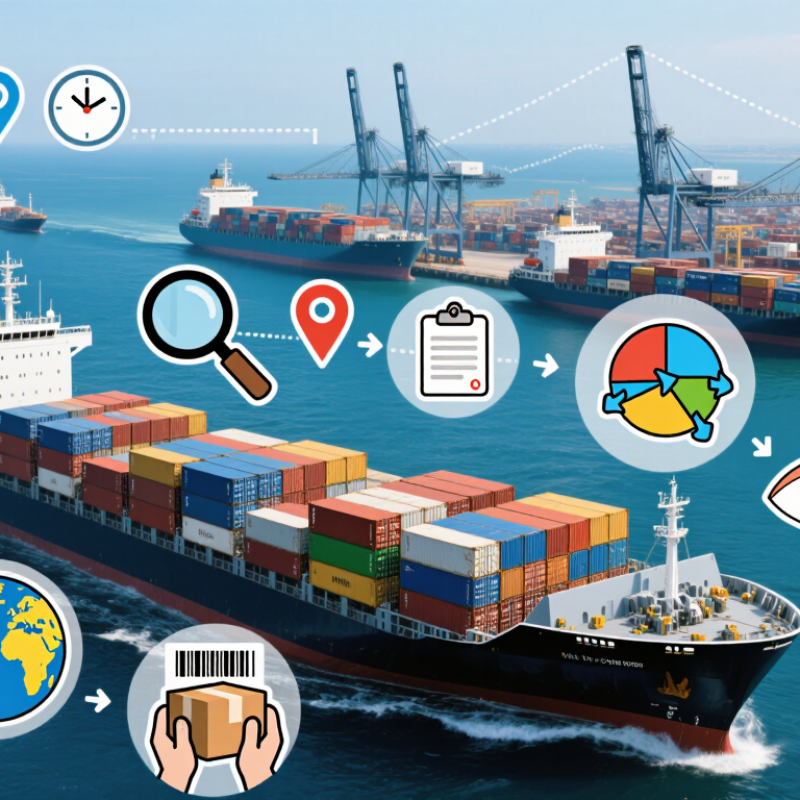
Understanding Consolidated Sea Cargo Logistics in 2026
Consolidated sea cargo logistics, often called LCL shipping, combines shipments from several exporters in one container. Each shipment occupies only part of the available space. This can reduce transport costs for smaller volumes. It also creates extra handling points. Plan carefully.
In 2026, reliable consolidation depends on accurate cargo details. Provide exact carton counts, dimensions, weight, product descriptions, and pickup locations. A single incorrect measurement can change the final freight charge. Moisture-sensitive goods may need sealed inner packaging and desiccant bags. Mixed cargo should also be compatible in weight, odor, and handling requirements. A wooden crate beside fragile cartons needs careful loading, not a rushed decision.
Schedule discipline matters. Consolidated cargo usually follows warehouse receiving cutoffs, container closing dates, and port sailing schedules. Ask for a written timeline covering pickup, consolidation, departure, transshipment, arrival, and final delivery. Verify tracking updates against warehouse records. Documentation should match the physical cargo exactly. Small discrepancies can cause delays or inspections. No forecast is perfect. Weather, port congestion, and missing paperwork can still disrupt plans. A practical review should examine insurance limits, delivery responsibilities, communication speed, and the provider’s experience with similar cargo. Choose measured reliability over an attractive estimate that hides handling risks.
| Decision Area | Data Dimension | 2026 Planning Reference |
|---|---|---|
| Shipment Profile | Recommended cargo volume | Consolidated sea cargo is generally suitable for shipments below a full container load, especially cargo between approximately 1 and 15 cubic metres. The final choice should also consider weight, cargo density and destination handling fees. |
| Shipment Profile | Common cargo types | Packaged consumer goods, furniture components, machinery parts, textiles, non-perishable goods and palletised commercial cargo. Dangerous goods, temperature-sensitive products and oversized cargo require specialist acceptance before booking. |
| Transit Planning | Typical port-to-port sailing time | Approximately 15–45 days on major intercontinental routes. Longer routings, transshipment, congestion, weather events and temporary vessel diversions can extend the schedule. |
| Transit Planning | Typical door-to-door lead time | Approximately 25–60 days, including origin collection, consolidation, export clearance, ocean transport, destination deconsolidation, import procedures and final delivery. |
| Consolidation | Cargo unitisation | Cargo is usually consolidated with shipments from multiple consignors into a shared container. Pallets, cartons, crates and secured loose packages should be labelled with shipment references and handling instructions. |
| Consolidation | Minimum charge basis | Charges may be calculated by cubic metre, chargeable weight, pallet position or shipment minimum. Request the applicable minimum charge before comparing quotations. |
| Cost Control | Main cost components | Origin pickup, export documentation, warehouse receiving, consolidation, ocean freight, destination deconsolidation, terminal or handling charges, customs clearance, import taxes and final-mile delivery. |
| Cost Control | Most important quotation check | Confirm whether the quote is door-to-door, port-to-port or warehouse-to-warehouse. Check the inclusion of origin and destination handling, customs clearance, storage, delivery appointments and fuel-related surcharges. |
| Service Selection | Best use case | Best for non-urgent cargo where lower space utilisation and flexible delivery timing are more important than speed. It is often more economical than booking an entire container for a small shipment. |
| Service Selection | When to consider a full container | Compare a full-container option when cargo volume approaches container capacity, when the cargo is fragile or high-value, when direct loading is preferred, or when reduced handling and a fixed sailing schedule are priorities. |
| Documentation | Core shipping documents | Commercial invoice, packing list, transport document, export declaration where required, certificate of origin where applicable, and permits or safety documents for regulated products. |
| Documentation | Data accuracy requirements | Product descriptions, quantities, weights, dimensions, customs classification, country of origin and consignee details should match across shipping and customs documents to reduce inspection and clearance delays. |
| Schedule Reliability | Booking lead time | A practical planning window is 7–21 days before the intended sailing. Additional buffer is advisable during peak retail periods, public holidays, adverse weather or periods of port congestion. |
| Schedule Reliability | Key milestone tracking | Monitor cargo receiving, consolidation completion, container gate-in, vessel departure, transshipment if applicable, arrival notice, customs release, deconsolidation and final delivery. |
| Risk Management | Main operational risks | Port congestion, blank sailings, transshipment delays, cargo damage from repeated handling, incorrect documentation, customs inspections, storage charges and delivery appointment failures. |
| Risk Management | Cargo protection measures | Use suitable packaging, moisture protection, corner protection, pallet wrapping, internal cushioning, visible labels and photographic records at handover. Confirm whether cargo insurance is included or must be purchased separately. |
| Compliance | Regulated cargo screening | Batteries, chemicals, aerosols, food, plants, wood packaging, medical products and other controlled goods may require declarations, certificates, special packaging or prior approval. |
| Sustainability | Emissions comparison | Ocean transport generally produces lower transport emissions per tonne-kilometre than air freight, but emissions vary with vessel efficiency, route, container utilisation, inland transport and the calculation method used. |
| Technology | Useful digital capabilities | Online quotation, document upload, milestone alerts, shipment tracking, inventory visibility, electronic proof of delivery, exception notifications and downloadable cost records. |
| Vendor Evaluation | Service-level questions | Ask about consolidation frequency, sailing options, cut-off times, average dwell time, claims handling, customs support, destination delivery coverage, storage policy and escalation procedures. |
| Decision Rule | Recommended selection priority | Compare providers in this order: Total landed cost Transit reliability Destination coverage Documentation support Cargo protection Tracking quality |
FAQS
Record each carton’s length, width, height, weight, and quantity. Recheck every measurement. Small errors can change pricing and loading space.
Note whether each item is fragile, moisture-sensitive, stackable, or temperature-sensitive. Heavy cartons should not rest on delicate packages.
Use strong outer cartons and internal cushioning. Protect corners and empty spaces. Add clear handling marks. Packaging is rarely perfect.
Yes. Keep them away from strongly scented materials. Ask how mixed cargo is separated, inspected, and repacked.
Check the commercial invoice, packing list, bill of lading, cargo classification, origin details, and verified gross mass. Names and quantities must match.
Request inspection records, seal-control procedures, loading photographs, and milestone alerts. Ask who handles exceptions. Silence is not reassurance.
Not always. Compare transit time, handling steps, port charges, delivery arrangements, and liability limits. A cheaper quote may create more handling risks.
Start with one small shipment. Compare timestamps, document changes, and seal integrity. Then decide whether the process deserves larger volumes.
Conclusion
Choosing Consolidated Sea Cargo Logistics in 2026 requires a clear understanding of how shared-container shipping works and how it can balance cost, efficiency, and flexibility. Start by assessing the shipment’s size, weight, packaging, timing, handling needs, and compatibility with other cargo. This helps determine whether consolidation is suitable and reduces the risk of delays, damage, or unexpected charges.
Next, compare available routes, sailing schedules, transit times, pricing structures, and service capabilities. Carefully verify documentation, customs requirements, cargo descriptions, insurance arrangements, and security procedures before booking. A reliable plan should also include shipment tracking, coordinated pickup and delivery, communication standards, and contingency options for schedule changes. After delivery, review transit performance, costs, condition of the cargo, and service responsiveness. By evaluating each stage systematically, businesses can select a practical Consolidated Sea Cargo Logistics solution that supports predictable delivery, transparent budgeting, and long-term supply chain improvement.