
Knowledge Base & News
Logistics & Supply Chain Insights
Expert articles, industry updates, and practical guides on international air, ocean, and road freight forwarding.
China Top Temperature-Controlled Warehouse Storage?
Table of Contents
- What Temperature-Controlled Warehouse Storage Means in China
- How Temperature-Controlled Warehouses Maintain Stable Conditions
- Which Industries Use Temperature-Controlled Storage Services
- How to Evaluate China’s Leading Warehouse Storage Providers
- What Standards Ensure Safe and Reliable Warehouse Operations
- FAQS
- Conclusion
- Related Posts
Finding China’s top Temperature-Controlled Warehouse Storage provider requires more than comparing floor space or advertised rates. Reliable evaluation begins with temperature stability, monitoring depth, trained staff, and documented operating procedures. A modern facility may maintain 2°C to 8°C zones, frozen chambers, or controlled ambient areas. However, each product needs a verified range.
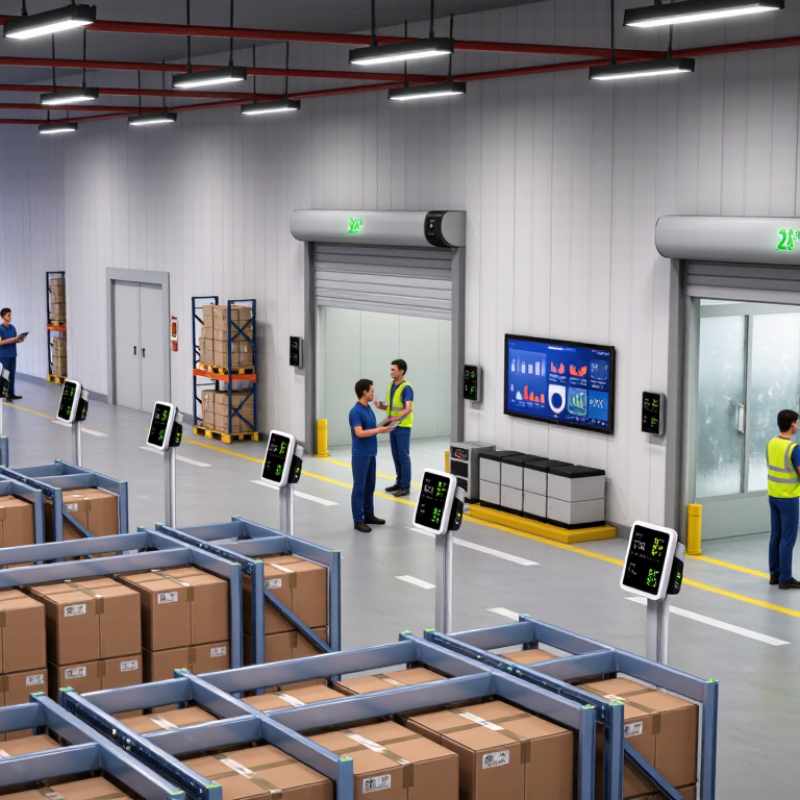
Walk through the warehouse, if possible. Look for calibrated sensors, insulated doors, backup power, clear aisle markings, and clean loading docks. Ask how quickly staff respond to temperature alarms. A strong operator should provide shipment records, equipment maintenance logs, and emergency response plans. These details reveal operational maturity better than polished brochures.
China’s leading facilities often combine regional distribution networks with warehouse management systems. Real-time dashboards can show temperature trends, humidity, inventory movement, and alarm history. That evidence supports traceability and more dependable decision-making. Yet technology alone is not enough. A sensor may work perfectly while a loading door remains open too long.
Experience matters.
Site selection should consider climate, transport routes, seasonal demand, and delivery distance. Coastal humidity, winter freezing conditions, and urban congestion can affect performance. Independent audits and customer references add useful confidence, but they should not replace direct verification. Even well-managed facilities can experience delays, maintenance gaps, or communication problems. This guide examines practical selection criteria, service capabilities, compliance expectations, and hidden risks. The goal is not to name a provider without evidence. It is to identify storage partners that protect product quality through measurable, repeatable, and transparent operations.
What Temperature-Controlled Warehouse Storage Means in China
China Top Temperature-Controlled Warehouse Storage?
What Temperature-Controlled Warehouse Storage Means in China
Temperature-controlled warehouse storage in China means maintaining a stable environment for goods affected by heat, cold, or humidity. This service supports food, pharmaceuticals, flowers, chemicals, and other sensitive products. Conditions are selected according to product requirements, not warehouse convenience.
China’s climate makes control especially important. A warehouse in Guangzhou may manage high humidity, while facilities in northern cities face dry winters and freezing temperatures. Reliable operations use calibrated sensors, mapped storage zones, alarm systems, and documented inspection procedures. Staff should record temperatures during receiving, storage, picking, and loading. A cold room at 2–8°C can still lose control when doors remain open too long.
Small details matter. Pallets should not block air circulation. Goods need space from walls and cooling units. Backup power is also essential during storms or equipment failure. Data records help identify when a problem started and whether products require assessment.
No system is perfect. Sensors can fail, and alarms may be ignored during busy periods. That weakness deserves attention. Regular calibration, staff training, emergency drills, and clear responsibility reduce these risks. Experienced warehouse teams also review temperature trends instead of checking isolated readings. In practice, dependable storage is not only about cold rooms. It combines suitable equipment, trained people, accurate records, and disciplined daily handling.
What Temperature-Controlled Warehouse Storage Means in China
Temperature-controlled warehouse storage uses monitored temperature zones to protect products during storage and handling. The chart shows commonly used temperature ranges in China's pharmaceutical storage practice: cold storage at 2–8°C, cool storage at 0–20°C, and ambient storage at 10–30°C. Product-specific regulations and labeling requirements should always be confirmed before storage.
How Temperature-Controlled Warehouses Maintain Stable Conditions
Temperature-controlled warehouse storage depends on stable conditions, not simply a cold room. Staff set temperature ranges according to each product’s documented requirements. They also monitor humidity, airflow, and door activity. A digital sensor near the loading area may show changes that a central sensor misses.
Reliable warehouses use calibrated sensors at several heights and zones. Readings are recorded continuously, creating a clear history for quality checks. When temperatures move outside the approved range, alarms notify trained personnel quickly. Workers then inspect doors, cooling equipment, product placement, and recent loading activity. Small details matter. A door left open for five minutes can affect nearby pallets.
Air must circulate around stored goods. Shelves should not block vents, and cartons should remain off the floor when procedures require it. Receiving teams often move products into controlled areas without unnecessary delay. Backup power and planned equipment maintenance also reduce avoidable disruptions. Still, no system is perfect. Sensors can fail, alarms may be ignored, and records can contain human errors. Regular calibration, staff training, and independent reviews help expose these weaknesses.
Stable conditions also require disciplined daily habits. Workers should verify alarm status, inspect condensation, and compare digital records with physical observations. A warehouse may look clean and orderly while a hidden airflow problem develops behind stacked cartons. Practical experience encourages frequent checks, not blind trust in software. That balance supports reliable storage and protects product quality.
Which Industries Use Temperature-Controlled Storage Services
Temperature-controlled storage supports industries where heat, cold, or humidity can damage products. In China, these facilities commonly serve pharmaceutical manufacturers, hospitals, food processors, agricultural suppliers, and cosmetic producers. Each sector needs different conditions. Vaccines and biologic medicines may require 2–8°C storage, while frozen foods often need temperatures below -18°C.
Pharmaceutical warehouses depend on calibrated sensors, alarm systems, backup power, and documented access records. Staff also monitor loading times, because an open dock door can quickly affect product quality. Food companies use chilled rooms for dairy, meat, seafood, and prepared meals. They often apply first-expired, first-out inventory control to reduce waste. Fresh produce needs careful humidity management, not simply a colder room.
Agricultural businesses store seeds, flowers, and fruit in controlled environments during transport delays or seasonal peaks. Cosmetic companies may protect creams, serums, and natural oils from heat and sunlight. Chemical manufacturers also use temperature-controlled areas for stable, compliant handling of sensitive materials.
In practical warehouse inspections, clean records matter as much as modern equipment. Operators should review sensor accuracy, maintenance logs, emergency procedures, and delivery performance. No facility is flawless. A single missed alarm or poorly sealed door can create a costly problem. Regular staff training and independent checks make storage more reliable, though they cannot remove every risk.
How to Evaluate China’s Leading Warehouse Storage Providers
China Top Temperature-Controlled Warehouse Storage?
How to Evaluate China’s Leading Warehouse Storage Providers
Choosing temperature-controlled warehouse storage in China requires more than comparing rental prices. Start with the required temperature range, product sensitivity, and delivery routes. A reliable provider should show recent temperature records, calibration certificates, and documented handling procedures. Ask how often sensors are checked. Ask who reviews alarm alerts. Clear answers matter.
Visit the facility if possible. Look for clean loading areas, sealed doors, backup power, and separate zones for different temperature needs. Check whether the warehouse uses continuous monitoring or only manual checks. Request a sample dashboard and an incident report. Experienced teams should explain how they respond to equipment failure, delayed transport, or unexpected temperature changes. Their answer should be practical, not polished.
Tips: Compare at least three providers using the same checklist. Review insurance, service-level terms, access controls, and delivery performance. Confirm whether their systems support batch records and full traceability. A small pilot shipment can reveal weaknesses that a sales meeting hides. No scorecard is perfect. I would also revisit the evaluation after the first busy season, because capacity promises may change under pressure. Reliable storage is built through evidence, routine checks, and honest communication.
China Top Temperature-Controlled Warehouse Storage? - How to Evaluate China’s Leading Warehouse Storage Providers
A practical, non-brand-specific evaluation matrix for comparing temperature-controlled warehouse storage providers in China
| Evaluation Dimension | Recommended Benchmark | Evidence to Request | Why It Matters | Suggested Weight | Score |
|---|---|---|---|---|---|
| Temperature Capability | Dedicated zones for chilled storage at 2–8°C, frozen storage at or below −18°C, and specialized ultra-low-temperature storage where required. | Validated temperature-mapping reports, equipment specifications, and recent calibration certificates. | The storage range must match the product label, regulatory requirements, and the required transport temperature profile. | 15% | 1–5 |
| Temperature Stability | Continuous monitoring with documented alarm limits, excursion procedures, and corrective-action records. | Temperature graphs, alarm-test records, deviation reports, and standard operating procedures. | Stable conditions help protect product quality and provide evidence when a temperature excursion occurs. | 15% | 1–5 |
| Monitoring and Traceability | 24/7 data logging, controlled user access, time-stamped records, and retained historical data. | System screenshots, audit-trail samples, data-retention policy, and access-control documentation. | Reliable records support product release decisions, customer audits, investigations, and regulatory inspections. | 10% | 1–5 |
| Power and Equipment Resilience | Backup power, emergency procedures, preventive maintenance, and critical-spare-parts availability. | Generator or alternative-power test logs, maintenance plans, failure-response procedures, and service records. | Power interruptions and refrigeration failures can quickly create losses, especially for chilled and frozen products. | 10% | 1–5 |
| Regulatory and Quality Compliance | Processes aligned with applicable Chinese requirements, including pharmaceutical GSP obligations or food cold-chain standards where relevant. | Business licenses, permits, quality manuals, audit reports, training records, and corrective-action history. | Compliance reduces operational, product-safety, and market-access risks. Requirements vary according to the product category. | 15% | 1–5 |
| Warehouse Design and Hygiene | Separated temperature zones, suitable insulation, hygienic surfaces, pest-control procedures, and appropriate drainage and air circulation. | Facility drawings, hygienic inspection records, pest-control logs, cleaning schedules, and temperature-zone layout. | Good design limits cross-contamination, condensation, temperature variation, and handling damage. | 10% | 1–5 |
| Inventory Accuracy and Handling | Documented receiving, put-away, picking, cycle-counting, stock-rotation, and quarantine procedures. | Warehouse management system reports, inventory-accuracy results, FEFO procedures, and sample transaction records. | Accurate inventory control reduces expiry, mis-picks, shrinkage, and unnecessary temperature exposure during handling. | 10% | 1–5 |
| Capacity and Scalability | Sufficient pallet, carton, or cubic-meter capacity with clearly defined usable capacity by temperature zone. | Capacity statement, current utilization, expansion plan, peak-season capacity, and minimum-volume requirements. | A provider should support normal demand, seasonal peaks, product launches, and future volume growth without compromising storage conditions. | 8% | 1–5 |
| Location and Distribution Access | Practical access to major ports, airports, highways, production clusters, and end-market distribution routes. | Facility coordinates, transport lead-time estimates, delivery coverage, and contingency-route plan. | Location affects inbound costs, outbound speed, delivery reliability, and exposure to traffic or weather disruption. | 5% | 1–5 |
| Service Responsiveness | Defined service-level agreements covering receiving, order processing, inventory reporting, incident escalation, and customer support. | Service-level agreement, escalation chart, performance reports, and anonymized customer references. | Clear service commitments make operational performance measurable and simplify issue resolution. | 7% | 1–5 |
| Commercial Transparency | Clear pricing for storage, handling, value-added services, utilities, peak surcharges, minimum charges, and accessorial fees. | Rate card, sample invoice, contract terms, liability limits, insurance requirements, and adjustment mechanism. | A transparent cost structure helps compare providers on total landed cost rather than headline storage price alone. | 5% | 1–5 |
| Scoring method: Rate each dimension from 1 to 5, where 1 means insufficient evidence or high risk and 5 means verified capability with strong documentation. Multiply each score by its suggested weight to create a weighted comparison. Benchmarks should be adjusted for the product category, contract scope, packaging, required temperature range, and applicable Chinese regulations. Relevant references include China’s cold-storage design requirements, food cold-chain hygiene requirements, and pharmaceutical Good Supply Practice obligations where applicable. | |||||
What Standards Ensure Safe and Reliable Warehouse Operations
China Top Temperature-Controlled Warehouse Storage: What Standards Ensure Safe and Reliable Warehouse Operations
A dependable temperature-controlled warehouse begins with verified standards, not attractive equipment. Operators should follow applicable Chinese food-safety requirements and use recognized systems such as HACCP or ISO 22000. These frameworks guide hazard control, hygiene, documentation, and corrective action. Temperature zones must match product requirements, while calibrated sensors should record conditions continuously. A sensor reading is only useful when staff trust its accuracy.
Reliable operations also require validated refrigeration, backup power, alarm testing, and planned maintenance. Loading doors should limit warm-air entry, and clean floors should prevent slips and contamination. Staff need documented procedures for receiving, storage, picking, and emergency response.
During audits, I have found that small details matter. A delayed alarm call can damage an entire pallet. Paper records alone may also hide weak practices. Digital logs are better, but they still need human review.
Tips: Place sensors near doors, corners, and product centers. Test alarms monthly. Keep calibration certificates accessible. Record every temperature excursion and its response. Train employees with real loading scenarios, not only classroom slides. Review pest-control, cleaning, and maintenance records regularly. Leave clear space around evaporators. It improves airflow. One honest weakness remains common: teams sometimes check temperatures only before inspections. Continuous discipline matters more than perfect paperwork.
FAQS
It means maintaining stable temperature and humidity for sensitive goods. Conditions follow product needs, not warehouse convenience.
Food, pharmaceuticals, flowers, chemicals, and other heat-sensitive or moisture-sensitive goods may require it.
Southern facilities may manage high humidity. Northern warehouses may face dry winters and freezing temperatures.
Some products require 2–8°C storage. However, open doors can quickly disrupt that range.
It should use calibrated sensors, mapped zones, alarms, and documented inspections. Staff should record conditions during receiving, storage, picking, and loading.
Pallets should leave air passages open. Goods need space from walls and cooling units. Sealed doors also reduce temperature loss.
Storms or equipment failures can interrupt cooling. Backup power, emergency drills, and clear responsibilities reduce possible damage.
Compare at least three providers with one checklist. Review temperature records, calibration certificates, insurance, traceability, and delivery performance.
If possible, yes. Check loading areas, doors, separate zones, monitoring systems, and backup power.
Yes. A pilot may expose weaknesses hidden during a sales meeting. Still, one test cannot prove everything.
Conclusion
Temperature-Controlled Warehouse Storage in China refers to specialized facilities designed to keep products within carefully defined temperature and humidity ranges throughout receiving, storage, handling, and dispatch. These warehouses use insulated structures, refrigeration or heating systems, humidity controls, monitoring sensors, backup power, and alarm procedures to maintain stable conditions despite seasonal changes or equipment issues. Such services are especially important for food and beverages, pharmaceuticals, healthcare products, cosmetics, chemicals, flowers, and other temperature-sensitive goods.
When evaluating China’s leading warehouse storage providers, businesses should consider temperature accuracy, monitoring frequency, storage capacity, inventory management, transportation connections, emergency response, and operational transparency. Reliable facilities should follow documented procedures for sanitation, equipment maintenance, staff training, product traceability, and access control. They should also demonstrate compliance with applicable safety, quality, and industry standards through records, inspections, and effective risk-management systems. A strong provider combines dependable infrastructure with clear communication, flexible service options, and consistent performance across the entire storage process.

Blog Tags: